
Understanding food poisoning
Respondents’ general understanding of food poisoning was examined largely as a warmup exercise to the group discussions as well as to set some understanding of the priority that different groups place on it. Moderators spent five to ten minutes discussing this at the beginning of the groups and then at the close of the group shared a showcard that depicted simple food safety tips known as the “4Cs” (chilling, cleaning, avoiding cross-contamination and cooking) and spent five to ten minutes discussing respondents’ thoughts on food safety and where they could go for further information. See Figure 1a and 1b for the 4Cs for the showcards.
This section of the document reports on outcomes from both elements of discussion bringing together initial thoughts and considered thoughts based on what they had heard from the group discussion and information provided by FSS.
While this section was not designed as a main point of enquiry it provides a good understanding of where respondents are currently positioned in terms of their understanding of food poisoning and the importance they place on this subject. In so doing, it demonstrates some of the challenges associated with receptiveness to messaging and interventions aimed at reducing the incidence and burden of foodborne illness in Scotland.
Figure 1a: 4Cs showcard
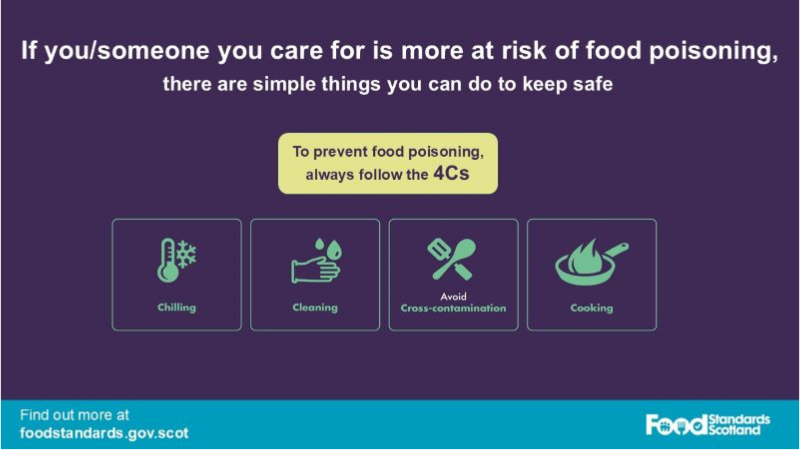
Here is a visual only chart of: Showcard to highlight the 4Cs on Food Standards Scotland template. The text states: "If you/someone you care for is more at risk of food poisoning, there are simple things you can do to keep safe. To prevent food poisoning, always follow the 4Cs." There are 4 images for the 4Cs. 1) Chilling, with a picture of a thermometer. 2) Cleaning, with a picture of washing hands. 3) avoid Cross-contamination, with a picture of kitchen utensils. 4) Cooking, with a picture of a frying pan.
Please find more information provided in the detailed description and/or table below.
The showcard pictures the 4Cs.
If you someone you care for is more at risk of food poisoning, there are simple things you can do to keep safe. To prevent food poisoning, always follow the 4Cs:
- The 4Cs are
- Chilling, with a picture of a thermometer.
- Cleaning, with a picture of washing hands.
- avoid Cross-contamination, with a picture of kitchen utensils.
- Cooking, with a picture of a frying pan.
Figure 1b: 4Cs showcard
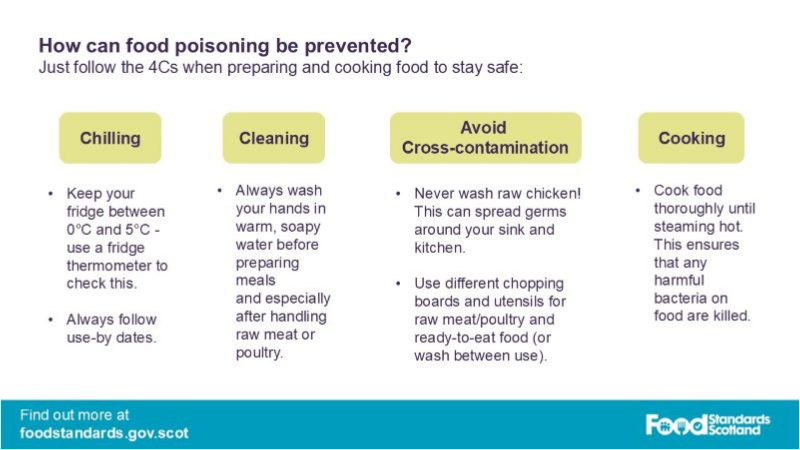
Here is a visual only chart of: Showcard on Food Standards Scotland template which has the following text: How can food poisoning be prevented? Just follow the 4Cs when preparing and cooking food to stay safe. Chilling - Keep your fridge between 0 degrees Celsius and 5 degrees Celsius - use a fridge thermometer to check this. - Always follow use-by dates. Cleaning - Always wash your hands in warm, soapy water before preparing meals and especially after handling raw meat or poultry. Avoid cross-contamination - Never wash raw chicken! This can spread germs around your sink and kitchen. - Use difference chopping boards and utensils for raw meat/poultry and ready-to-eat food (or wash between use). Cooking - Cook food thoroughly until steaming hot. This ensures that any harmful bacteria on food are killed.
Please find more information provided in the detailed description and/or table below.
The showcard displayed the following text:
- How can food poisoning be prevented?
- Just follow the 4Cs when preparing and cooking food to stay safe.
Chilling
- Keep your fridge between 0 degrees Celsius and 5 degrees Celsius - use a fridge thermometer to check this.
- Always follow use-by dates.
Cleaning
- Always wash your hands in warm, soapy water before preparing meals and especially after handling raw meat or poultry.
Avoid cross-contamination
- Never wash raw chicken! This can spread germs around your sink and kitchen.
- Use difference chopping boards and utensils for raw meat/poultry and ready-to-eat food (or wash between use).
Cooking
- Cook food thoroughly until steaming hot. This ensures that any harmful bacteria on food are killed.
Overview
Across all groups high levels of self belief and reliance on personal experience made it difficult for food safety messaging in the media to gain traction and influence behaviour. Food poisoning was not high on the list of priorities for most groups. Carers were more conscious of good practice largely as a result of anxiety shaped by past experience of the COVID–19 pandemic and hygiene practices adopted then and a desire to protect loved ones. Those who were immunocompromised did not exhibit any higher levels of consciousness to food poisoning than healthy members of the public. Older adults were particularly entrenched in their habits and relied on the habits of a lifetime.
Understanding of food poisoning varied widely across all groups, as most respondents relied on their own experiences rather than consistent or authoritative information. Few actively sought out technical or research based guidance, and many expressed confidence in their current practices because they had “been fine up until now”.
Most respondents believed food poisoning exists on a spectrum of severity and felt it was more likely to be contracted when eating out of the home. When discussing causes, food poisoning was commonly attributed to high risk foods such as prawns, chicken and seafood, as well as poor kitchen and personal hygiene, undercooking (particularly chicken), reheating food more than once or inadequately, and cross contamination between raw and cooked foods.
Despite this general awareness, respondents demonstrated notable gaps between understanding and actual practice. Examples of poor practice included consuming food past its use by date, not checking fridges temperatures and washing raw chicken.
When shown the 4Cs guidance, respondents generally understood the principles intuitively, although this did not always reflect their everyday behaviours. They claimed to understand them intuitively and highlighted effective behaviours they already practised, such as handwashing, following packaging instructions, storing food correctly and maintaining high standards of general cleanliness. However, some aspects were less well recognised or misunderstood, particularly the risks associated with washing raw chicken and the importance of controlling fridge temperature. This was true of all groups.
Views from general population
In general, food poisoning was not top of mind. A few had completed a food safety course years ago as a result of fostering or working in a delicatessen, but many didn’t pay close attention to current food hygiene practices other than messages at Christmas to defrost turkeys properly. Some were careful to check out reviews of restaurants before eating out.
Despite this, respondents who had experienced severe food poisoning tended to describe it as a serious and frightening event, characterised by rapid onset, significant danger, and in some cases the need for hospitalisation. For example, one participant recalled becoming severely ill while on holiday in Turkey, which strongly shaped their understanding of food poisoning as an acute and potentially dangerous condition. In contrast, others referred to much milder experiences, using terms such as “a dodgy tummy,” while some described incidents where family members, including children, became very unwell after eating particular foods such as seafood.
These accounts highlighted a broad perception of food poisoning as existing along a wide spectrum of severity.
“I had some seafood that wasn't cooked properly and I've genuinely never been as ill in my entire life. I was throwing up, running to the toilet, got to the point where I had to sleep on a mattress outside the bathroom door, and then I ended up having to go to hospital because I was so dehydrated and so unwell. It was that severe.” General Population ABC1
“I mean, I think about it mostly like when I'm going out, like...
especially when it's like Christmas time, you have a night out with the job folks. If I never heard of the place or I'll go and do some, you know, I'll go on the internet and see if anything came up about the place, if they had any like food poisoning from people.” General Population ABC1
Views on food handling practices, particularly defrosting methods, were mixed. Many respondents reported using outdated or unsafe thawing practices, such as leaving food on the kitchen countertop or placing it in warm water, indicating gaps between perceived and recommended food safety behaviours. Some had a vague recollection of seeing food safety advice on TV but couldn’t specify precisely where or when.
“I've seen one where it tells you if you're using raw chicken to clean the surfaces in that after you've prepared it.” General Population C2DE
[On seeing the showcard of 4Cs] “My goodness, I'm never washing chicken again.” General Population C2DE
Views from older adults
Older adults relied strongly on their own personal experience and habits of a lifetime rather than food safety messaging. They didn’t recognise or seek out information on food safety. None could recall food safety messaging. Like other groups, understanding of food poisoning was largely based on personal experience and was therefore inconsistent.
A few had experienced food poisoning in a mild form, one had contracted dysentery and another salmonella poisoning while abroad. Two mentioned being more careful when cooking for others but in general the attitude of older adults was fairly relaxed towards food poisoning.
“I think most people know that you're not going to prepare food for anything like that if your hands are full of oil or dirt or muck and things. As [another participant] says, it's the way you've been brought up and you learn from parents and others.” Older Adult C2DE
“I would probably be more concerned if I was doing it for others, possibly a wee bit slap dash when I'm just doing it for myself, maybe not as careful as I should be. But certainly, if I was doing it for other people, I would be making sure I didn't use the same knife for raw meat and then use it for cooked food or veg.” Older Adult ABC1
“I do quite a lot of cooking and like entertaining, so the last thing I want is to give anybody food poisoning or, you know, an upset tummy because of something that I've done. So I have different colour-coordinated chopping boards.” Older Adult ABC1
Views from immunocompromised
Many of those that were immunocompromised considered food purchased from out of home to be more dangerous than in-home food. A few had experienced food poisoning and as a result avoided the foods they thought caused it, usually seafood. When asked about food safety messaging they had seen, few could recall any. When shown the 4Cs, respondents mostly had a good understanding of everyday prevention practices such as keeping fridges cold, following use-by dates, washing hands and avoiding cross-contamination. Some were more concerned about food safety than others.
“I'm usually very good with food hygiene and things like that, you know. But I haven't seen anything about it.” Immunocompromised
“I don't watch much telly at night, but I remember quite a while ago when it was like not washing your chicken, great big stickers in the supermarket on your chicken about telling you not to wash it before you cook it.” Immunocompromised
“I've seen adverts to that effect on the telly about using thermometers and stuff to make sure that your turkey is properly cooked, but apart from that, I'm the same as everybody else. I haven't really seen much.” Immunocompromised
“It'd be nice to have these drummed into people a little bit, like we got drummed in about COVID and washing or 111 for police, fire, all that sort of, these little 4Cs. I mean, we get drummed in about stroke victims in the face, don't we, you know? So why can't we have these?” Immunocompromised
Views from carers
Carers sense of food safety concern was strongly linked to their responsibility and guilt avoidance. Anxiety, which was for many, shaped by past experience of the COVID–19 pandemic, the hygiene habits adopted during that era and their desires to protect vulnerable loved ones.
“I mentioned earlier about my granddad having dementia, it’s very, very difficult and it’s always that ownership of the responsibility that lands with you that you could potentially make someone that’s in your family that you love very, very sick. Especially at that age, you know, it's very, very difficult to take that brunt of responsibility on.” Carer
They voiced awareness of risks associated with incorrect food storage (leaving food out too long), undercooked meat, especially chicken, use-by dates, cross contamination, leftovers and reheating practices. Many were avid readers of labels but few could recall sources of formal food safety messaging. Even so, many adhered strictly to food safety procedures when preparing food.
“My granddad was ill. I prepared some meals for him and he’d left the chicken out for a while...maybe a couple of days. He’d cooked it but then he ate it again, kind of, a couple of days later when it wasn’t really at its freshest. He wasn’t well and he got put off to the hospital. That was one incident that happened in my life.” Carer
“A lot of people that I support or care for are diabetic, so I'm quite used to looking for sugar content and things, as an example. So look...you know, turning it over to check the...you know, salt, sugar, carbohydrates, calories and that. I'm quite used to looking at those.” Carer
“I mean, if I'm making mince and you're stirring all the mince, and then I'm cooking vegetables, I use different knives and I wash my hands in between because...well especially since COVID. I had COVID which wasn’t pleasant, so I really, really don't want any, kind of, germs, especially as...at my age, I'm considered elderly, and I've got pre-existing conditions so I really don't want to add to that.” Carer
Many were confused, unsure about or inconsistent in their behaviours around frozen food expiry rules, use by dates after freezing, shelf-life after opening for condiments and other packaged foods, interval before refrigeration (cooling vs. leaving food out too long) and how long leftovers safely last.
“My grandparents, I do a lot of their cooking and I put a lot of big labels on so they can read it when I’ve cooked it. I'm quite conscious of...I guess, when I've cooked it and how long I’ve left it out for and when I put it in the fridge, because obviously it needs to be cooled down before you start putting it in the fridge or freezing.” Carer
“I think there’s a, sort of, general assumption that anything that’s frozen will be okay whenever you go to eat it and I'm not even so sure on that myself to be honest, things that have past that date. I think there’s a lot of confusion around that.” Carer