
Executive Summary
The Small and Micro Food Business Operator (FBO) Tracking Survey monitors the perceptions, experiences, and regulatory awareness of small and micro food businesses. The 2025 wave marks the fifth iteration of the study in England, Wales and Northern Ireland and the first to include Scottish FBOs, enabling Food Standards Scotland (FSS) to gather dedicated insights. The research aims to deepen understanding of regulatory attitudes, assess trust in FSS as a modern and accountable regulator, and explore how businesses operate within the wider food safety system.
The study was conducted by IFF Research. Fieldwork consisted of structured telephone interviews with a sample of 150 small and micro FBOs operating in Scotland. Interviews were carried out with respondents responsible for food safety within their businesses, covering a broad mix of sectors, Food Hygiene Information Scheme ratings, and business sizes. The achieved sample was weighted to reflect the underlying population of eligible Scottish FBOs.
Infographic
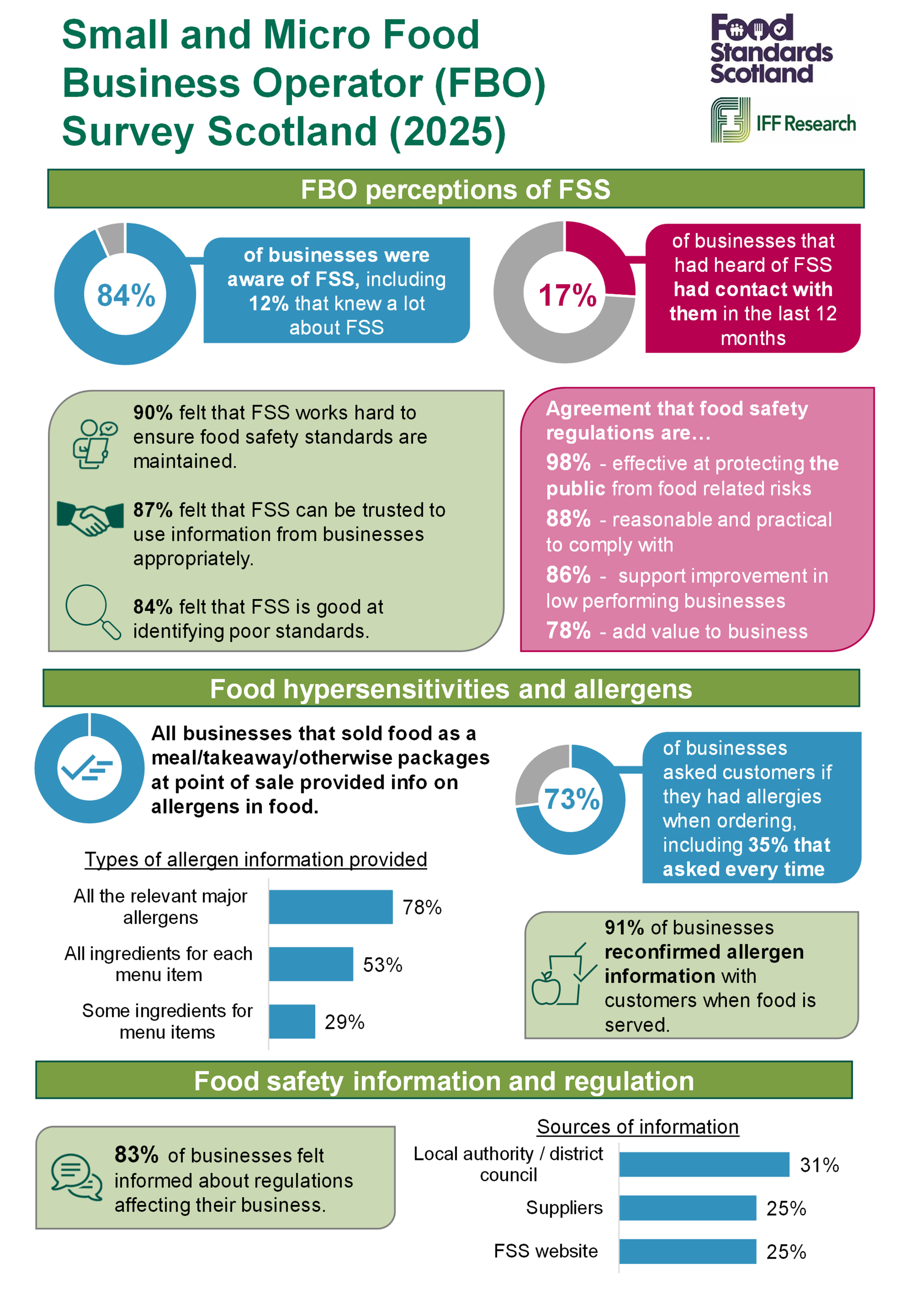
Here is a visual only chart of: Infographic summarising the report findings. Section 1: “FBO perceptions of FSS.” A donut chart shows 84% of businesses were aware of Food Standards Scotland (FSS), 12% knew a lot about FSS. A second donut chart shows 17% of businesses that had heard of FSS had contact with them in the last 12 months. A panel of key perceptions states: 90% felt FSS works hard to ensure food safety standards are maintained; 87% felt FSS can be trusted to use information from businesses appropriately; and 84% felt FSS is good at identifying poor standards. Another panel shows agreement that food safety regulations are effective at protecting the public from food related risks 98%; reasonable and practical to comply with (88%) ; support improvement in low performing businesses (86%); and add value to business (78%). Section 2: “Food hypersensitivities and allergens.”All businesses selling food as a meal, takeaway, or packaged at point of sale provided information on allergens in food. A donut chart shows 73% of businesses asked customers if they had allergies when ordering, including 35% that asked every time. A bar chart labeled “Types of allergen information provided” shows: 78% provided information on all relevant major allergens; 53% provided all ingredients for each menu item; and 29% provided some ingredients for menu items. A callout box states 91% of businesses reconfirmed allergen information with customers when food is served. Section 3: “Food safety information and regulation.” A callout states 83% of businesses felt informed about regulations affecting their business. A bar chart labeled “Sources of information” shows: 31% local authority/district council; 25% suppliers; and 25% FSS website. The design uses green section headers, rounded colored callout boxes, donut charts, and horizontal bar charts, with simple icons reinforcing themes such as trust, inspection, allergens, and information.
Please find more information provided in the detailed description and/or table below.
Infographic summarising the report findings.
Section 1: “FBO perceptions of FSS.” A donut chart shows 84% of businesses were aware of Food Standards Scotland (FSS), 12% knew a lot about FSS. A second donut chart shows 17% of businesses that had heard of FSS had contact with them in the last 12 months. A panel of key perceptions states: 90% felt FSS works hard to ensure food safety standards are maintained; 87% felt FSS can be trusted to use information from businesses appropriately; and 84% felt FSS is good at identifying poor standards. Another panel shows agreement that food safety regulations are effective at protecting the public from food related risks 98%; reasonable and practical to comply with (88%) ; support improvement in low performing businesses (86%); and add value to business (78%).
Section 2: “Food hypersensitivities and allergens.”All businesses selling food as a meal, takeaway, or packaged at point of sale provided information on allergens in food. A donut chart shows 73% of businesses asked customers if they had allergies when ordering, including 35% that asked every time. A bar chart labeled “Types of allergen information provided” shows: 78% provided information on all relevant major allergens; 53% provided all ingredients for each menu item; and 29% provided some ingredients for menu items. A callout box states 91% of businesses reconfirmed allergen information with customers when food is served.
Section 3: “Food safety information and regulation.” A callout states 83% of businesses felt informed about regulations affecting their business. A bar chart labeled “Sources of information” shows: 31% local authority/district council; 25% suppliers; and 25% FSS website. The design uses green section headers, rounded colored callout boxes, donut charts, and horizontal bar charts, with simple icons reinforcing themes such as trust, inspection, allergens, and information.
Key findings
Businesses generally expressed high levels of confidence in FSS’s ability to maintain and improve food safety and standards. While most businesses were aware of FSS, many reported limited knowledge about its functions. Direct contact with FSS over the preceding year was infrequent, though those who had interacted with the organisation typically rated their experience positively, particularly in terms of ease of access, clarity, trustworthiness, and approachability.
Most businesses felt well informed about the regulations affecting them, although some reported gaps due to limited regulatory contact or a perception that certain regulations were not applicable to their activities. Local authorities were the most common source of information on food safety, alongside suppliers and the FSS website. The prevalence of businesses with a subscription to FSS news and alerts services were low.
More than half of businesses had undergone a food hygiene inspection within the past year, and a notable proportion had received advisory support or training from regulators. Experience of formal enforcement was not captured among the businesses surveyed. Many businesses had procedures for managing recalls or withdrawals, though mock recall exercises were not widely carried out.
All businesses involved in selling meals or takeaway food provided allergen information to customers, using a combination of written and verbal communication. Allergen information was most commonly provided to staff through proactive staff discussions during ordering and through staff training approaches such as verbal updates, formal training sessions, and online learning.
Businesses reported a range of operational barriers, with financial pressures, changing consumer behaviour, and staff-related costs frequently mentioned. Recruitment difficulties were concentrated in specialist and customer‑facing roles. Most businesses maintained a social media presence, though only a minority used online channels to accept customer orders. Few businesses used third‑party delivery platforms.
Awareness of the Scottish Food Crime and Incidents Unit (SFCIU) was relatively low, and only a small minority of businesses reported being victims of food crime within the previous year. Engagement in importing and exporting activities was limited, and very few businesses anticipated entering international trade in future.
Insights on key differences by business type
Micro businesses were more likely to rely solely on written allergen information and less likely to obtain food safety information from training providers. They also tended to use online channels less frequently for business operations.
Small businesses, particularly those with more employees, were more likely to make use of training providers, maintain a business website, and use online platforms for information. They showed a greater likelihood of seeking regulatory information proactively, including through the FSS website.
Service‑sector businesses were more likely to have concerns about staffing pressures and business rates. They were also less aware of FSS’s online guidance for recalls and withdrawals.
Businesses trading online reported lower confidence in how well FSS understands their needs and in the effectiveness of FSS communication within the food industry. However, they were also more likely to make active use of the FSS website as a source of guidance.
Conclusion
The findings indicate that small and micro-Scottish FBOs generally maintain strong levels of confidence in FSS and feel well informed about regulatory requirements. However, the findings suggest there may be varying levels of awareness of FSS’s role, engagement with regulatory communications, and understanding of recall guidance and allergen management practices. Financial pressures, recruitment challenges, and shifts in consumer behaviour present ongoing barriers to business resilience.