
Food crimes
This chapter explores businesses’ awareness of the Scottish Food Crime and Incident’s Unit (SFCIU), the dedicated law enforcement function of Food Standards Scotland. It then examines the prevalence of a variety of food crimes.
Awareness of the SFCIU
All businesses were asked whether they were aware of the Scottish Food Crime and Incident’s Unit (SFCIU). A minority (14%) of businesses were aware of the SFCIU, with most respondents (86%) having no awareness of them.
Businesses who were aware of the SFCIU were subsequently asked whether they were aware of the SFCIU’s Risk Profiling Tool for helping businesses prevent food crime. Of the 22 businesses that were aware of the SFCIU, 7 were aware of the SFCIU’s Risk Profiling Tool to help their business prevent food crime. Thirteen of the 22 businesses aware of the SFCIU were not aware of the SFCIU’s Risk Profiling Tool.
Proportions of businesses experiencing food crimes
All businesses were asked whether they had been the victim of any type of food crimes over the last 12 months. As shown in Figure 14, a minority (4%) of businesses had been victims of any food crime excluding shoplifting in the last 12 months. The most common food crime businesses said they had experienced was being supplied or offered a food product they believed to have been stolen (3%), followed by being supplied with a deliberately mislabelled food product (2%) and being dishonestly supplied with a substituted food product (1%).
Figure 14. Food crimes that businesses were victims of in the last 12 months
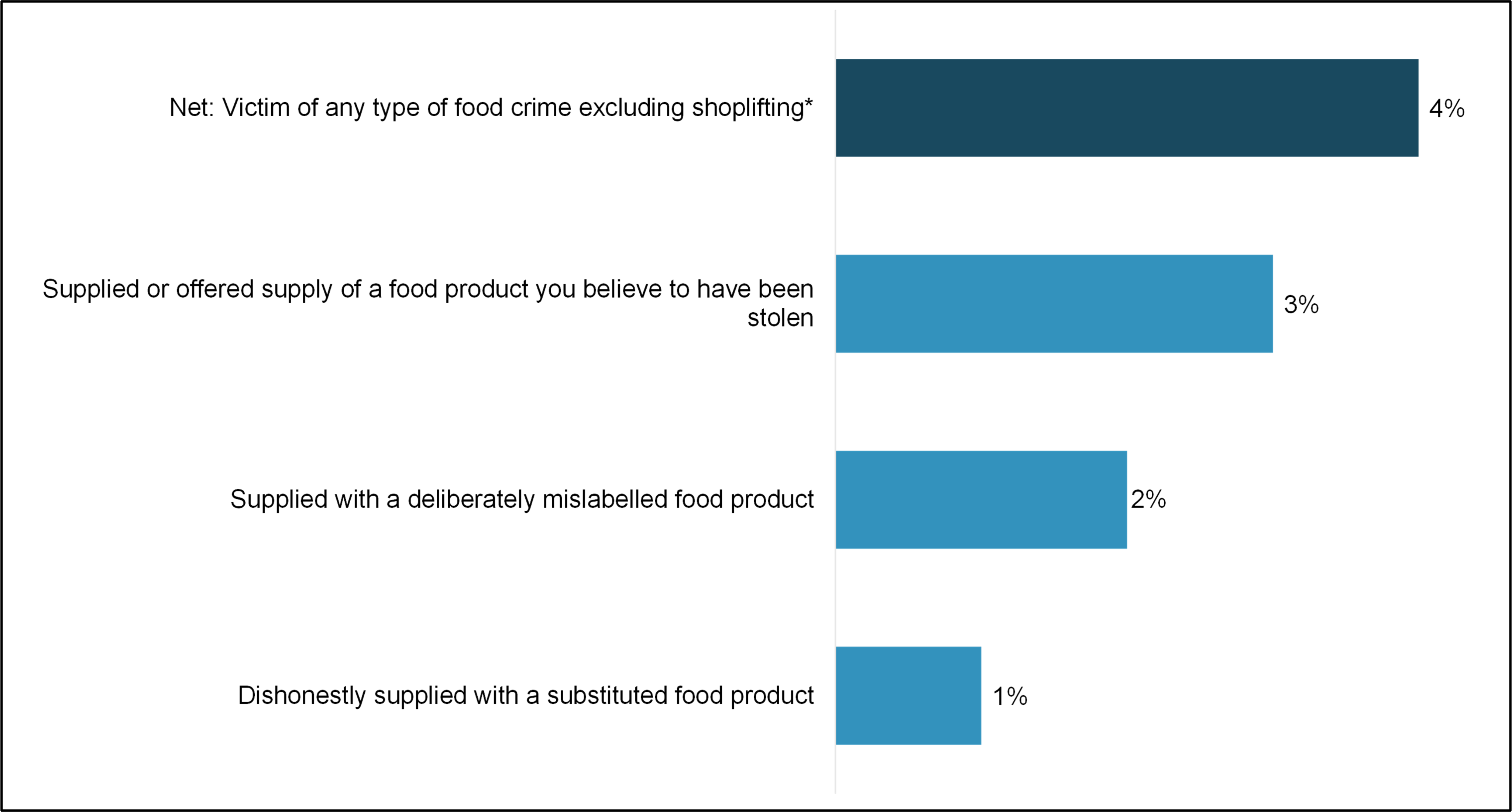
Here is a visual only chart of: Bar chart showing food crimes that businesses were victims of in the last 12 months. 4% of businesses had been victims of any food crime excluding shoplifting in the last 12 months. 3% had been supplied or offered a food product they believed to have been stolen, 2% had been supplied with a deliberately mislabelled food product and 1% had been dishonestly supplied with a substituted food product.
Please find more information provided in the detailed description and/or table below.
Bar chart showing food crimes that businesses were victims of in the last 12 months.
4% of businesses had been victims of any food crime excluding shoplifting in the last 12 months.
3% had been supplied or offered a food product they believed to have been stolen, 2% had been supplied with a deliberately mislabelled food product and 1% had been dishonestly supplied with a substituted food product.
E5. To the best of your knowledge, has your business been the victim of any of the following food crimes over the last 12 months? Base: All businesses (150). NOTE: Shoplifting is not an SFCIU matter and so is excluded from the overall. 17% of businesses had experienced shoplifting in the last 12 months but this was excluded from the chart as it is not an SFCIU issue.
Importing and Exporting
This short chapter provides evidence on the proportion of FBOs that have ever imported or exported goods or services, and how they imported or exported. It also covers whether those that do not currently import or export intend to do so in the future.
Overall proportions of businesses importing and exporting
Under one in ten businesses (8%) had ever imported or exported goods or services. Among the 92% of businesses that had not engaged in importing or exporting, almost all (98%) reported no intention of doing so in the future.
Businesses that had imported or exported were asked about specific destinations. Nearly all (13 out of 14) had conducted trade between EU countries and Great Britain or Northern Ireland (excluding the Republic of Ireland). Around two-thirds (9 out of 14) had traded between non-EU countries and Great Britain or Northern Ireland. 8 out of 14 had traded between Northern Island and Great Britain and 5 out of 14 had traded between the Republic of Ireland and Great Britain.