
Food hypersensitivities and provision of allergen information
This chapter explores how businesses manage allergen risks and communicate with customers. It covers the provision and type of allergen information, whether it is proactively displayed or given on request, and practices for checking and reconfirming allergy requirements during ordering and service. The chapter also examines awareness and use of guidance and tools, and methods of staff training on allergens.
Written or verbal allergen information
Businesses were asked whether they provide any written or verbal allergen information to customers or others to whom they supply food. Among businesses selling food as a meal, takeaway, or otherwise packaged at the point of sale, all (100%) reported providing allergen information.
As illustrated in Figure 7, six-in-ten businesses (59%) delivered allergen information through both written and verbal channels. Three-in-ten (30%) relied solely on written information, while one-in-ten (10%) communicated allergen information only verbally. Micro FBOs (those with less than 10 employees) were more likely to rely solely on written information than FBOs with 10 or more employees (36% vs 15%).
Figure 7. How businesses provided allergen information to customers
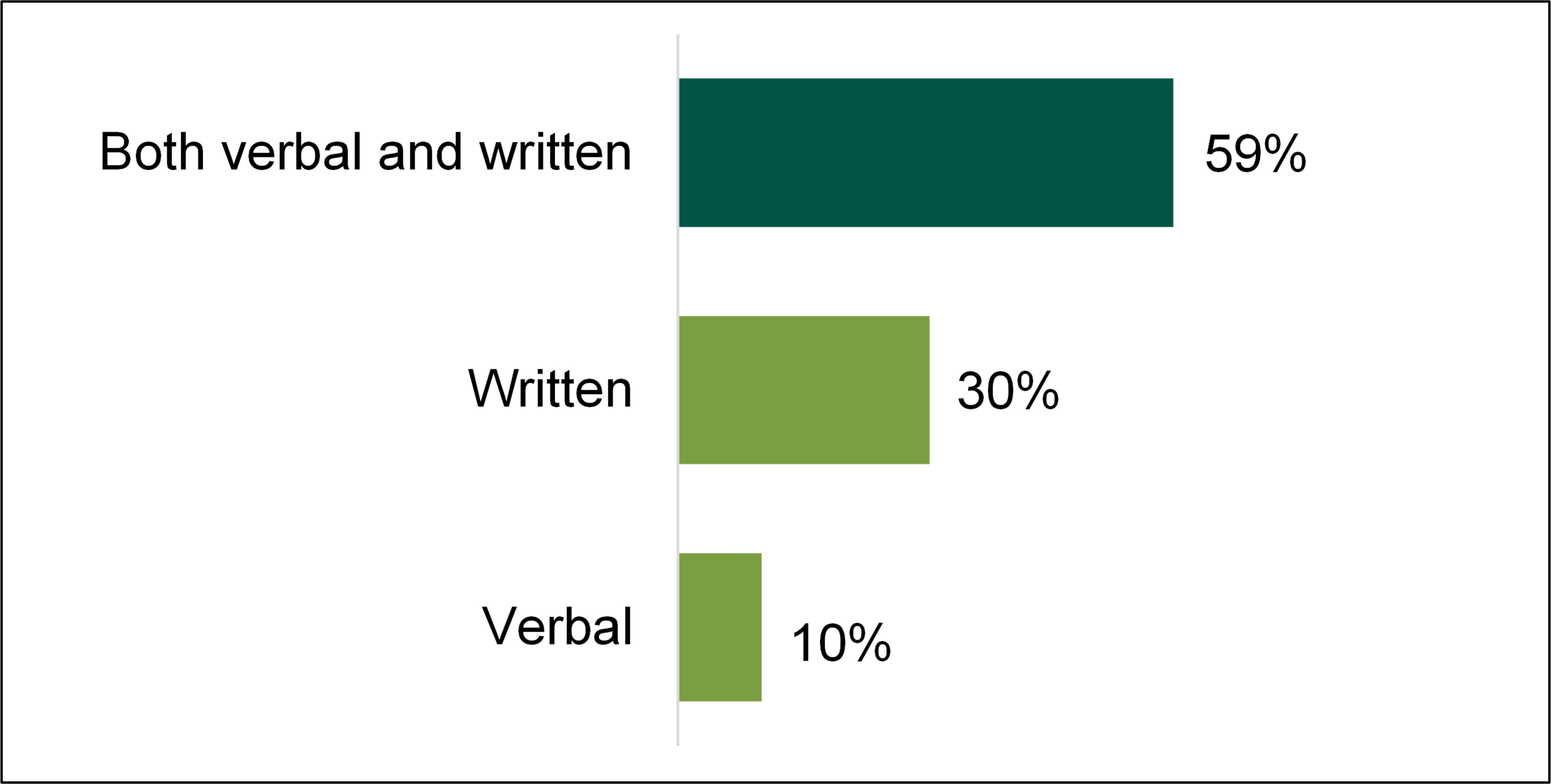
Here is a visual only chart of: Bar chart showing how businesses provide allergen information. 10% provide it verbally only, 30% written only and 59% both verbally and in written form.
Please find more information provided in the detailed description and/or table below.
Bar chart showing how businesses provide allergen information.
10% provide it verbally only, 30% written only and 59% both verbally and in written form.
C11a. Does your business provide any written or verbal allergen information to customers or people you provide food to? Base: Businesses that sell food as a meal or takeaway or otherwise packages at point of sale (84).
Businesses that provided written allergen information to customers were asked whether this information was made available without customers needing to request it. Three-in-ten (30%).
reported that written allergen information is proactively displayed to customers, while almost double (58%) said it is provided only upon request. The remaining 12% indicated that their approach varies. FBOs that received pre-packaged food or drink to be sold were more likely to proactively display written allergen information (45%).
Allergies covered
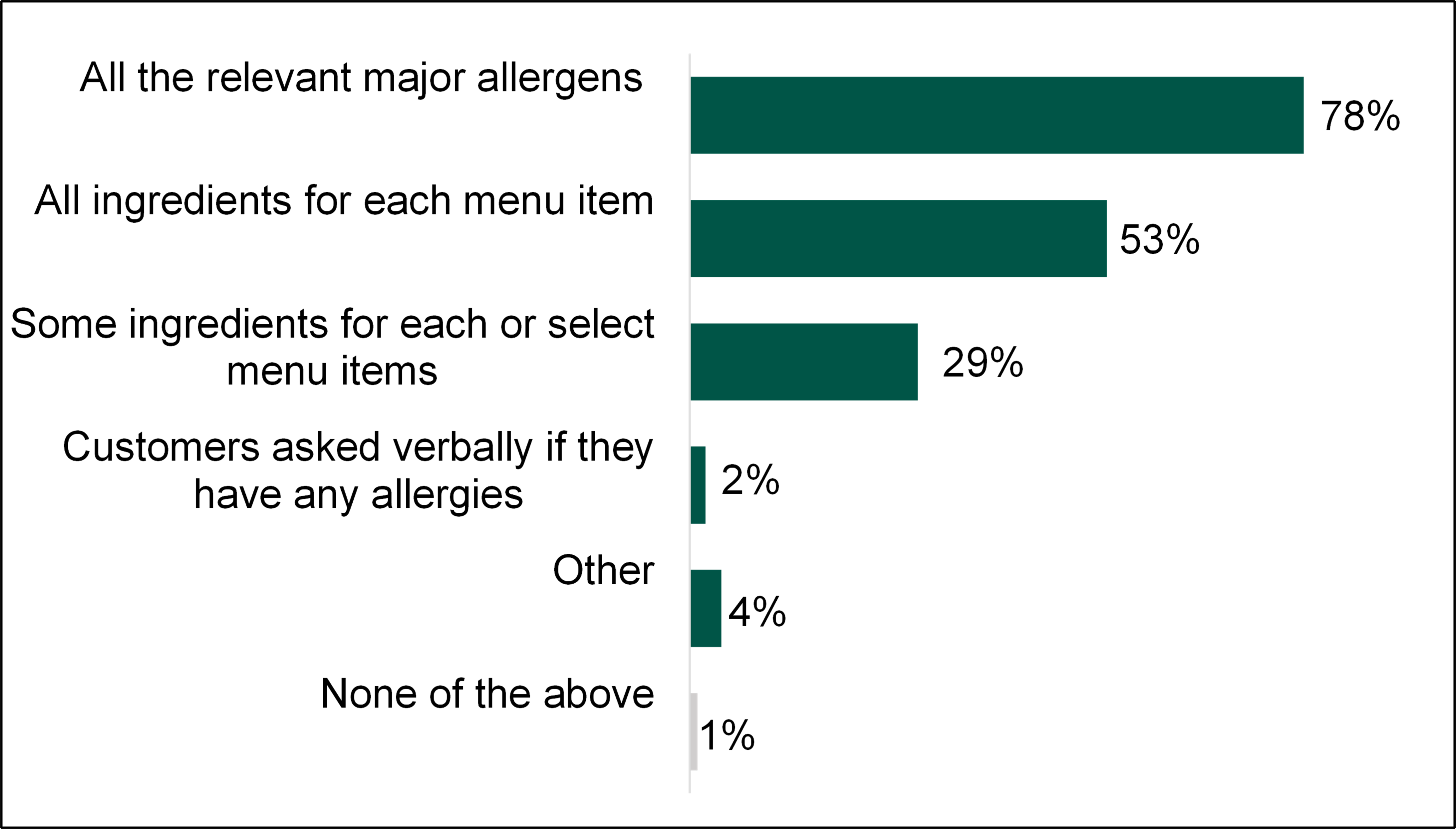
More than three-quarters of businesses (78%) that provided information on allergens, provided information on all the relevant major allergens present in menu items. Over half of businesses (53%) reported offering full ingredient lists for each menu item.
A smaller proportion (29%) said they provide information on only some ingredients or only for selected menu items, such as highlighting nuts or gluten but not all allergens. Very few businesses relied solely on verbal checks with customers (2%), and just 1% reported that they provided none of the listed types of allergen information in Figure 8.
Figure 8. Types of allergen and ingredient information that businesses provide to customers
Here is a visual only chart of: Bar chart showing types of allergen information provided to customers. 78% provided information across all the relevant major allergens, 53% for provided all ingredients for each menu item, and 28% did provided some ingredients for each or select menu items.
Please find more information provided in the detailed description and/or table below.
Bar chart showing types of allergen information provided to customers.
78% provided information across all the relevant major allergens, 53% for provided all ingredients for each menu item, and 28% did provided some ingredients for each or select menu items.
C11e. Which of the following information about allergens and ingredients, if any, does your establishment provide information on? Base: Businesses that provide information on allergens (84).
Frequency of asking about allergies
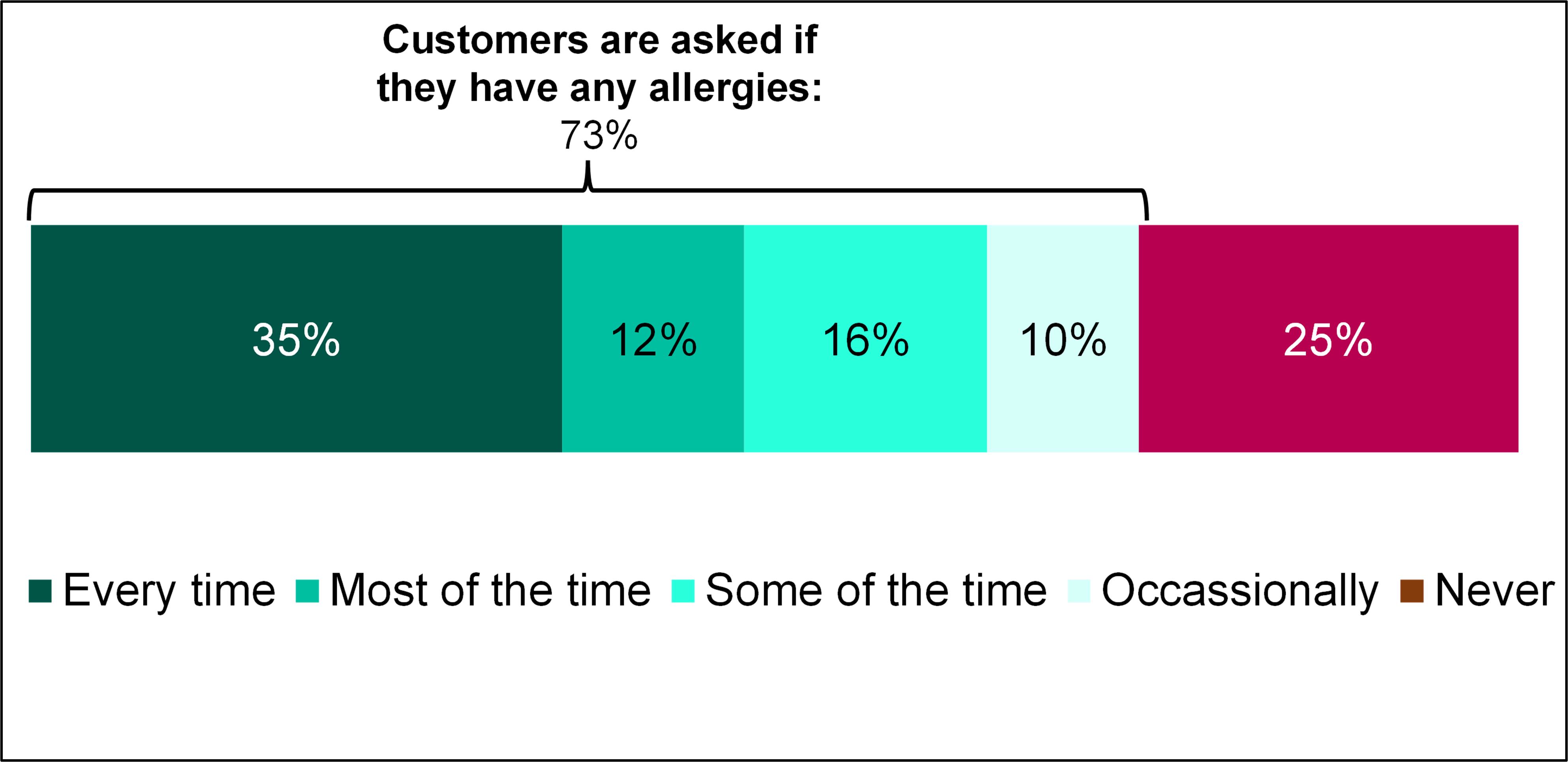
Almost three-quarters of businesses that sell food as a meal or a takeaway (or otherwise packaged at point of sale) (73%) reported asking customers about allergies when they were ordering food, as shown in Figure 9. This includes over a third (35%) that ask every time, 12% that ask most of the time, 16% that ask some of the time and one-in-ten (10%) that ask occasionally. In contrast, a quarter (25%) of these businesses reported that they never ask customers whether they have any allergies when they are ordering food.
Figure 9. How often customers are asked if they have allergies
Here is a visual only chart of: Bar chart showing how often customers are asked if they have allergies. 35% of FBOs that sell food at point of sale ask every time, 12% ask most of the time, 16% ask some of the time, 10% ask occasionally and 25% never ask.
Please find more information provided in the detailed description and/or table below.
Bar chart showing how often customers are asked if they have allergies. 35% of FBOs that sell food at point of sale ask every time, 12% ask most of the time, 16% ask some of the time, 10% ask occasionally and 25% never ask.
C11f. How often are customers asked if they have any allergies when ordering food at your business? Base: Businesses that sell food as a meal or takeaway or otherwise packages at point of sale (84).
Businesses were also asked whether allergen information reconfirmed with customers when their food is served, in the case that a person has made their allergen requirement known.
Most businesses (91%) reported reconfirming allergen information in some form. Most commonly, this was done verbally by staff (79%). Smaller proportions used labels, flags or stickers to identify allergen‑safe items (22%) or served the customer’s food separately (1%). However, only a minority (4%) of these businesses said they do not reconfirm allergen information at the point of service.
How staff are provided with information and training
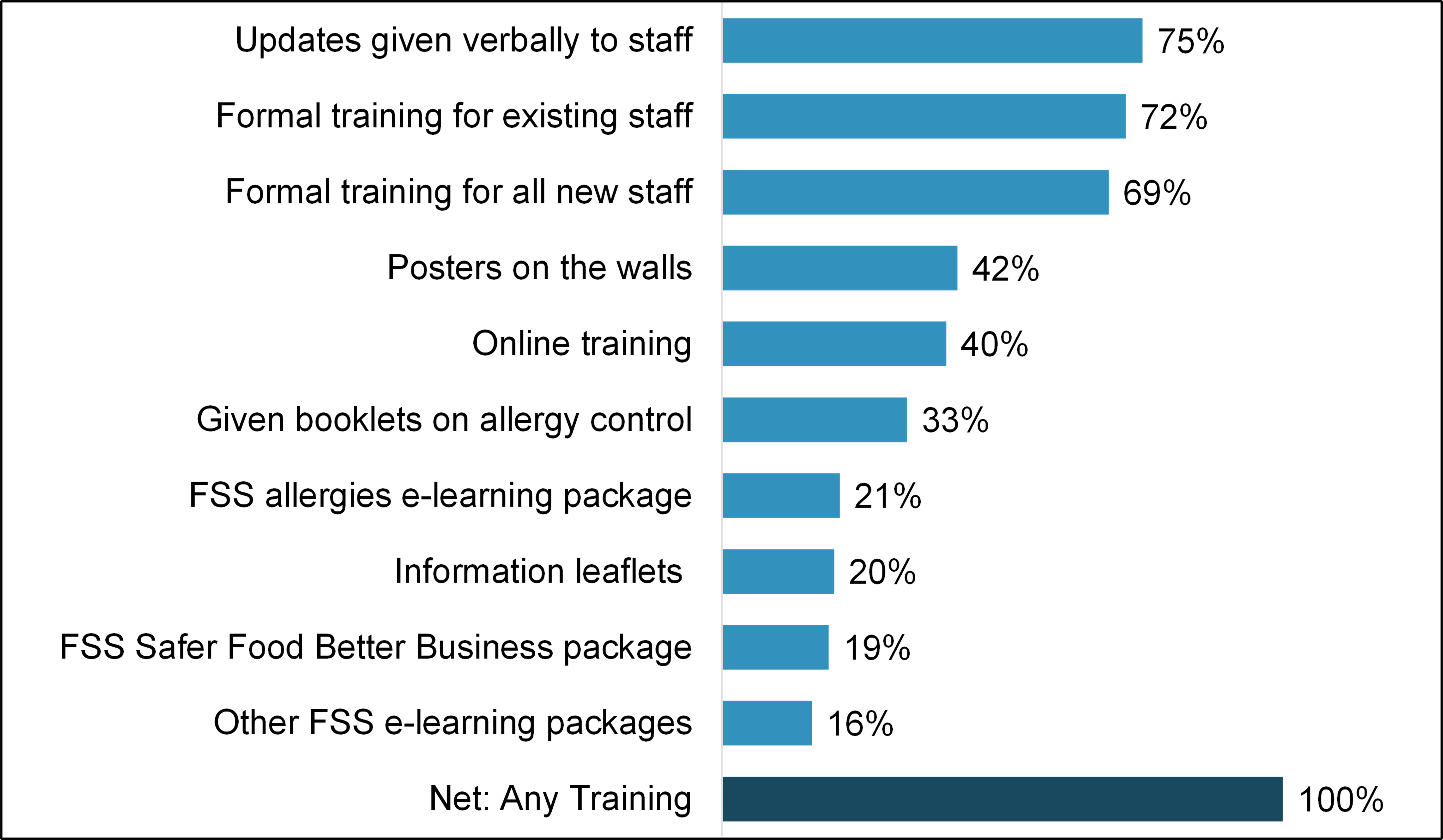
All businesses (100%) reported using at least one method to train or inform staff on food safety guidelines and regulations, including food allergens, as shown in Figure 1. The most common approaches were verbal updates provided during work (75%), followed by formal training for existing staff (72%) and formal training for all new staff (69%). Over four-in-ten businesses informed staff using posters on the walls (42%), and a similar proportion used online training either by the business or an external provider (40%).
Other resources were less widely used, including booklets on allergy control (33%), the FSS allergies e‑learning package (21%), information leaflets (20%), the FSS Safer Food Better Business package (19%), and other FSS e-learning packages (16%).
Figure 10. Training methods for staff and managers
Here is a visual only chart of: Bar chart showing types of training provided. All businesses selling food at point of sale conducted training. 75% gave updates to staff verbally, 72% gave formal training to existing staff, 69% gave formal training to new staff, 42% put posters on the wall, 40% did online training, 33% gave booklets on allergen control, 21% used FSS allergies e-learning pack, 20% used leaflets, 19% used FSS safer food better business package, 16% used other FSS e-learning packages.
Please find more information provided in the detailed description and/or table below.
Bar chart showing types of training provided.
All businesses selling food at point of sale conducted training. 75% gave updates to staff verbally, 72% gave formal training to existing staff, 69% gave formal training to new staff, 42% put posters on the wall, 40% did online training, 33% gave booklets on allergen control, 21% used FSS allergies e-learning pack, 20% used leaflets, 19% used FSS safer food better business package, 16% used other FSS e-learning packages.
C12. How are staff and managers provided with information and training on food safety guidelines and regulations including food allergies? Base: Businesses that sell food as a meal or takeaway or otherwise packages at point of sale (84). Responses less than 5% not charted.