
How digital technology and promotions shape what we eat


The way we order food has changed dramatically. In 2025, most of our takeaway delivery orders were placed using digital technology, which has made the process almost effortless (3).
However, behind the convenience are promotions and marketing tactics designed to influence what we buy, often without us even realising. Because it is now so easy to order food online, more than half of us are getting takeaways more often. The effect is even stronger in younger people (aged 16 to 24) who were the most frequent users (10). Given that takeaway foods are often less healthy, this growing trend of online ordering may have a negative impact on our health.
Promotions are hard to miss and appear to offer value for money, but looks can be deceiving.
The influence of online promotions
Even before you open a delivery app, promotions are everywhere. Notifications offer discounts, free delivery, meal upgrades, and time‑limited offers. They appear to be giving us great value for money, but those eye‑catching deals are more than just marketing; they influence what and how much we buy.

A recent study found that we are frequently exposed to promotions when placing orders online, especially when using third party apps, such as Just Eat or Deliveroo. These promotions work, as nearly three quarters of orders reported using a promotion. Price promotions, particularly meal deals and discount with a minimum spend, led to more food being ordered than intended, based on perceived value for money (19).
The diagram illustrates a real life example of a decision making process leading to an order placed, and the use of promotions as part of it (19).
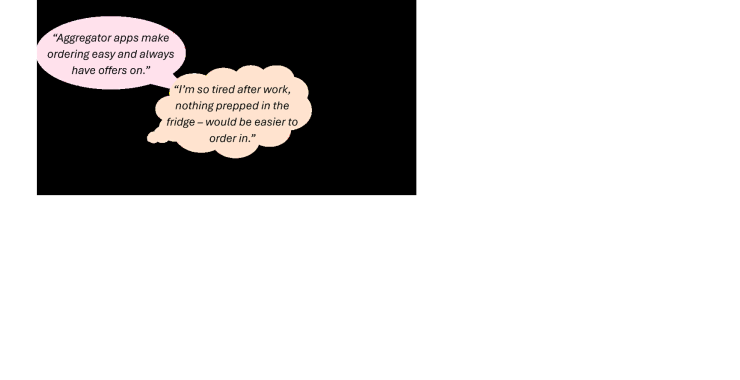
Here is a visual only chart of: Diagram illustrating a typical takeaway ordering journey. Background knowledge that food delivery apps are easy to use and often include offers, combined with immediate reasoning such as being too tired to cook, leads to the decision to order takeaway. The journey then progresses through choosing a cuisine, choosing an outlet, choosing items, and placing a final order, with promotions and offers influencing outlet choice, item selection, and the quantity ordered.
Please find more information provided in the detailed description and/or table below.
This diagram shows an example of the decision making process a participant from this research experienced when deciding to get a takeaway. The illustrations uses a flow chart to represent the process, which is:
- The participant uses immediate reasoning and thinks "Aggregator apps make ordering easy and always have offers on." and "I'm so tired after work, nothing prepped in the fridge - would be easier to order in."
- Decision to order takeaway is made.
- Choice of cuisine is made by discussing the type of food that they want to order with their partner
- Choice of outlet made by opening aggregator app, browsing outlets with promotions that offer desired cuisine. This is influenced by promotions.
- Choice of items is then made, considering personal likes, checking offers, adding items to reach minimum spend. This is influenced by promotions.
- Final order placed. More items are ordered as a result of promotions.
When a promotion makes indulgent takeaway food seem like the better deal, healthier choices can easily be pushed aside and we end up buying more than planned.
The deal with meal deals
Meal deals are a common type of price promotion out of home and are often promoted, especially in places such as the front of supermarkets, quick service restaurants and bakeries, where many products are already high in calories, saturated fat, sugar or salt (20).
These offer several items together, such as a sandwich, drink and snack, for a set price.
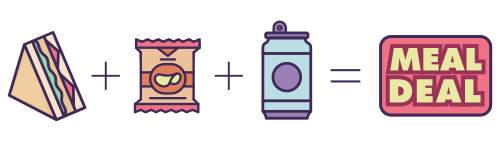
Here is a visual only chart of: Pictograph showing a meal deal made up of a sandwich, a packet of crisps, and a can of fizzy drink.
When foods are combined into a meal deal, the total calorie content can increase quickly (21). In some cases, a single meal deal can contain a large amount of the calories we need for an entire day!
Items and estimated calories for a burger meal deal
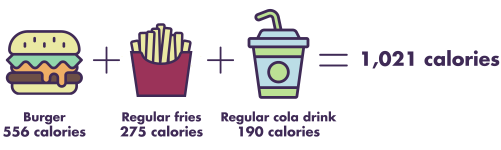
Here is a visual only chart of: Pictograph showing the calorie count of a burger, regular fries and a regular fizzy drink. The total calories is 1,021.
Please find more information provided in the detailed description and/or table below.
| Food type | Calories |
|---|---|
| Burger | 556 |
| Regular fries | 275 |
| Regular cola drink | 190 |
| Entire meal deal | 1,021 |
Items and estimated calories for a sandwich meal deal
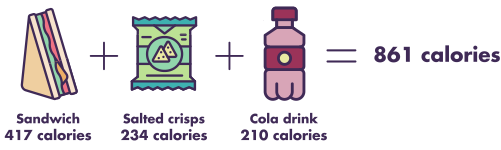
Here is a visual only chart of: Pictograph of a sandwich meal deal with a total of 861 calories
Please find more information provided in the detailed description and/or table below.
| Food type | Calories |
|---|---|
| Sandwich | 417 |
| Salted crisps | 234 |
| Cola drink (500ml) | 210 |
| Entire meal deal | 861 |
Digital technology and promotions make it harder to eat healthier
Digital technology has made ordering takeaway food easier and more popular than ever before. However, the combination of convincing online promotions, heavily marketed meal deals and limited healthy options creates an out of home environment that makes healthier eating harder, even for those who want to eat well.