
How healthy is eating out?



Food and drink available out of home are often high in calories, saturated fat, sugar, and salt, making it very challenging for consumers to eat and drink healthy options.
Meals that contributed most to calories purchased were often from fast food outlets, and included (8):
- Burger with a side and a soft drink: 1,022 calories
- Fish and chips: 1,425 calories
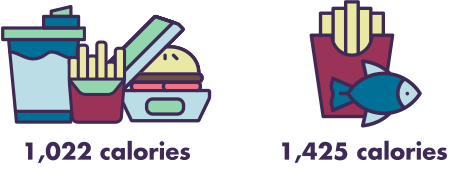
Here is a visual only chart of: Pictograph showing the average calorie content of four commonly eaten fast food meals. According to the results of a Nesta study, a burger with a side and a soft drink contained 1,022 calories and fish and chips contained 1,425 calories.
Please find more information provided in the detailed description and/or table below.
| Meal | Average calorie content |
|---|---|
| Burger with a side and a soft drink | 1,022 calories |
| Fish and chips | 1,425 calories |
Forty percent of us who order takeaway or delivery food say it's difficult to find healthy options (10).
When actual food samples were analysed, the results were even more striking. Nearly all UK wide takeaway meals sampled exceeded 600 calories, and over half contained more than 1,200 calories (11). With the Eatwell Guide recommendations of around 2,000 calories a day, a single takeaway could easily provide more than half a day’s intake (12).
Exploration of small and independent takeaway outlets in Scotland had similar findings, with high levels of calories, saturated fat and salt found in the food samples analysed. They also showed low levels of fibre, which is a concern as fibre makes a positive contribution to the diet and is something most people eat too little of (13).
Key results from Scotland:
- Battered pizza had an average of 1,327 calories per portion, which is about two-thirds of the recommended daily limit of 2,000 calories
- Doner kebabs had an average of 7.7 grams of salt per portion, which is 28% more than the recommended daily maximum of 6 grams
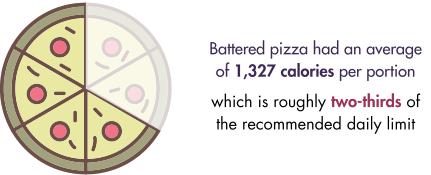
Here is a visual only chart of: Pictograph of a pizza showing two thirds of the recommended daily limit of 2,000 calories was met by the 1,327 calories per portion battered pizza.
Please find more information provided in the detailed description and/or table below.
| Food type | Sampling result | Recommended daily maximum |
|---|---|---|
| Battered pizza | 1,327 calories | 2,000 calories |
Eighteen percent of all the food samples tested had less than two grams of fibre per portion, which is a very small amount compared to the recommended 30 grams per day (14).
Wide ranges in portion size, and therefore calorie content, were found in some of the options explored. For example the largest macaroni cheese sample was more than four times that of the smallest, despite all portions purchased for analysis being ‘regular’ or ‘standard’ (13).
Smaller portions are possible! This could both benefit our health, and might even help businesses make more profit and reduce waste.
54% of us said that cheaper prices would encourage us to choose a healthier option (10).
Overall, the above demonstrates that these commonly consumed out of home foods contained high levels of calories, saturated fat and salt. Eating these foods too often could lead to poorer health.
Nutritional content of average cheeseburger & chips children’s meal
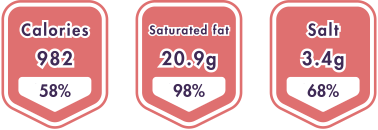
Here is a visual only chart of: .
Please find more information provided in the detailed description and/or table below.
| Average content of cheeseburger and chips children's meal | Share of recommended daily maximum | |
|---|---|---|
| Calories | 982 calories | 58% |
| Saturated fat | 20.9 grams | 98% |
| Salt | 3.4 grams | 68% |
With the rise in children at risk of overweight and obesity, improving these options is needed urgently.
72% of us feel that children’s menus should be healthier (10).
Out of home food purchases by occasion in Great Britain in 2025
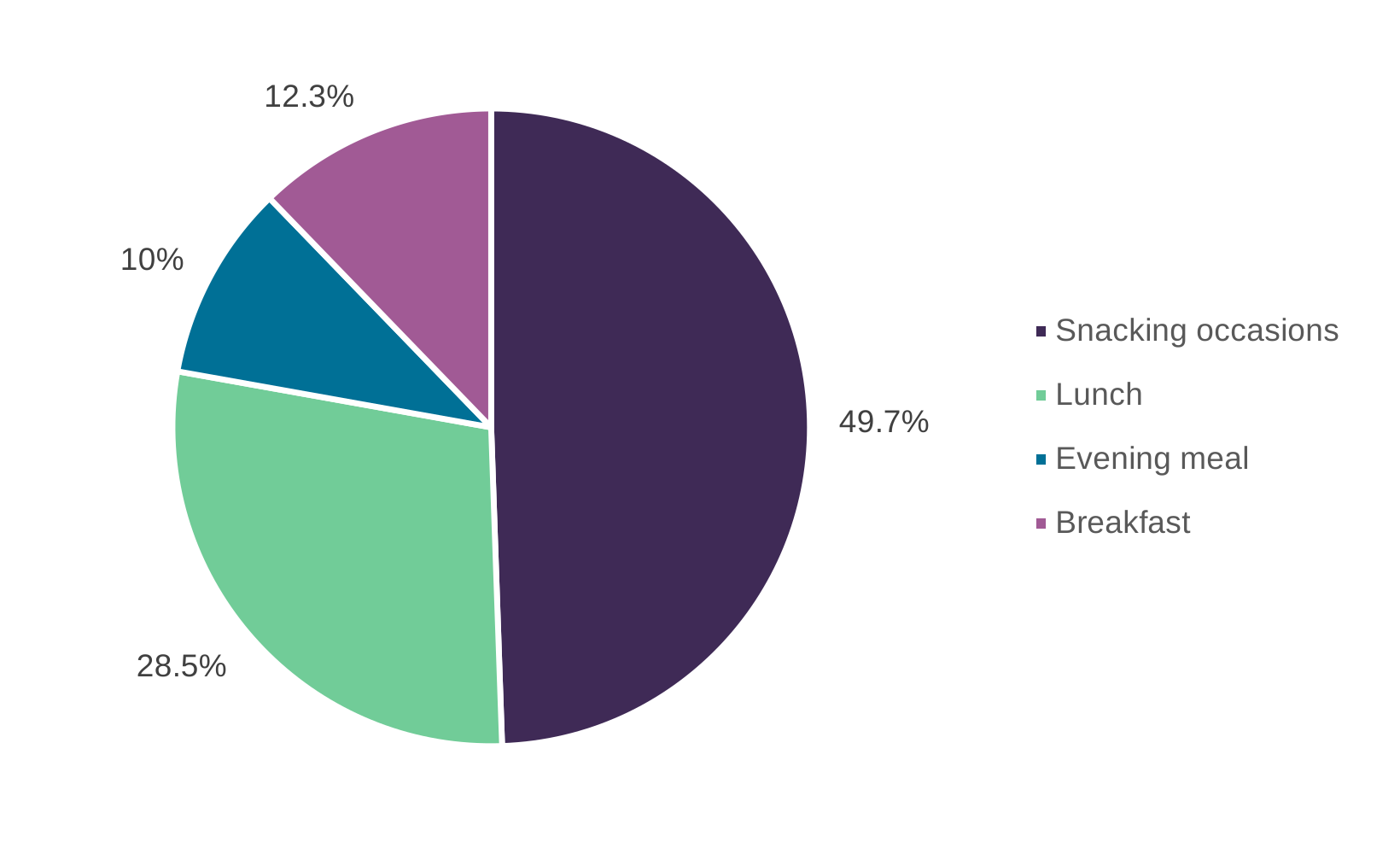
Here is a visual only chart of: Pie chart showing the share of food purchases by meal type and time of day
Please find more information provided in the detailed description and/or table below.
| Eating occasion | Share of purchases |
|---|---|
| Snacking | 49.7% |
| Lunch | 28.5% |
| Breakfast | 12.3% |
| Evening meal | 10% |
When sweet snack options, such as cakes, doughnuts, muffins and traybakes sold out of home were analysed, it was found that:
- the average snack had 449 calories
- almost 1 in 20 snacks exceeded 1,000 calories
Popular dessert drinks like milkshakes, and ice cream floats averaged 451 calories, almost a quarter of the recommended daily intake (17).
When combined with a meal, these dessert drinks can push calorie intake far above healthy levels, often without people realising.
Three quarters of these sweet snack products were more than the UK Government’s guideline of a maximum of 325 calories per portion (18). This demonstrates the need for further reformulation and portion size reduction.
A food environment that makes healthy eating hard
Across Scotland, eating out is easy, but eating well while eating out is not. Whether it’s a takeaway dinner, a quick snack, or a child’s meal, we are flooded with options high in calories, saturated fat, salt and sugar, while healthier alternatives are hard to find. Snacking is the most popular way to eat out, yet many snacks contain enough calories to derail a balanced diet.