
7. Determination
Qualification and competency requirements of Officers
7.1. All officers involved in the assessment of approval applications and the enforcement of food law within approved establishments must be appropriately qualified, experienced and competent. As a minimum, officers need to meet the following requirements:
For all approved establishments:
- Have knowledge and understanding of HACCP equivalent to Advanced HACCP (SCQF level 8) or equivalent (with particular focus on the manufacturing sector);
- Have suitable knowledge on the specific commodities being handled, the processes involved and the associated risks;
- Have adequate knowledge and understanding of OCV
- Have been assessed as being competent by the Lead Food Officer in relation to approved establishments, the commodities being handled, the processes being undertaken and the assessment of food safety management systems.
For LA approved establishments;
- Environmental Health Officer (EHO) holding the REHIS Diploma in Environmental Health or equivalent;
- Food Safety Officer (FSO) holding the Higher Certificate in Food Practice; or the Higher Certificate in Food Premises Inspection and the Higher Certificate in Food Standards.
For FSS approved establishments;
- Official Veterinarian Qualification as per Regulation (EU) 2017/625 and Commission Delegated Regulation (EU) 2019/624
- Wild Game designation (where applicable)
- RTE designation (where applicable)
7.2. Where a LA does not have an officer that meets the above requirements, they should request assistance from the FSS Enforcement Delivery Branch.
Determination of an Approval Application
7.3. Officers are required to verify that the food safety management system is capable of ensuring food safety.
7.4. In addition to the HACCP controls, it is necessary to confirm that the CA is satisfied that the establishment is compliant with the relevant specific requirements of Regulation (EC) 852/2004, Regulation (EC) 853/2004, and where applicable other EU assimilated law (i.e Regulation (EC) 2073/2005). These should be considered as pre-requisites to the application of the HACCP. In order to be granted conditional approval, the establishment must comply with the structural requirements and have a valid HACCP-based food safety management system.
7.5. The final decision on the determination of an application for approval should be undertaken by:
- For LA approvals, the Lead Officer for Food or an appropriate individual identified for this function.
- For FSS approvals, the Officer undertaking the approval assessment in consultation with a review panel comprised of the FSS Head Veterinarian, another approvals Officer and themselves.
7.6. Approvals Process Schematic
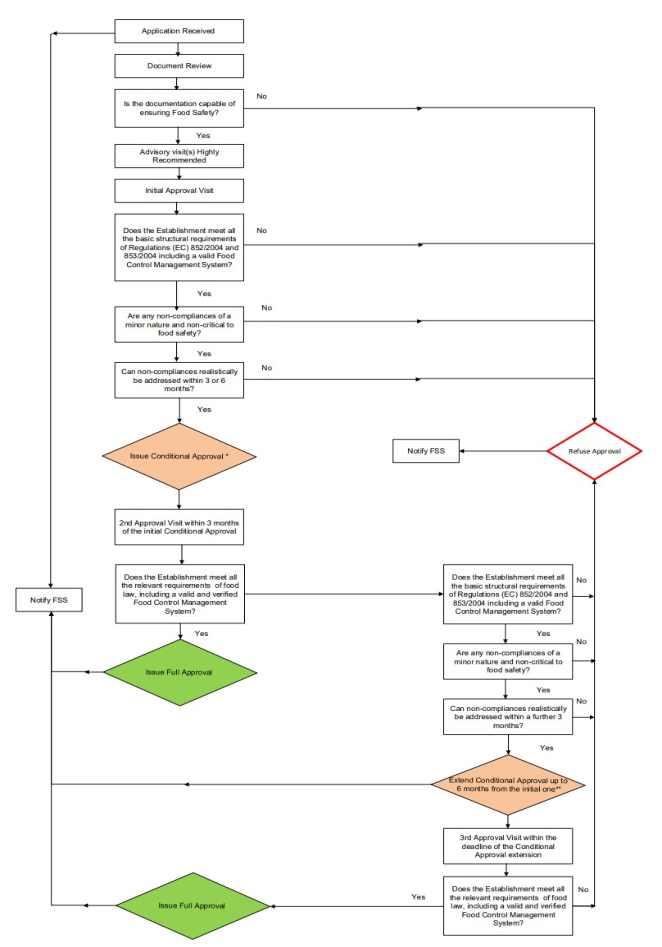
Here is a visual only chart of: Step 1 Application for approval Step 2 Document Review Step 3 Is the documentation capable of ensuring food safety? If no, refuse approval. If yes continue to step 4 Step 4 Advisory visit (recommended) Step 5 Initial approval visit Step 6 Does the establishment meet the basic structural requirements of Regulations (EC) 852/2004 and 853/2004? If no, refuse approval. If no refuse approval If yes continue to step 7 Step 7 Are any non-compliances of a minor nature and non-critical to food safety? If no refuse approval If yes continue to step 8 Step 8 Can non-compliances realistically be addressed within 3 or 6 months? If no refuse approval If yes issue conditional approval (In the vast majority of cases, it is not appropriate to issue a full approval at the first approval visit, as operations would most likely not been seen (the exception relates to a specific change of FBO circumstances) [see section 12] Step 9 Second approval visit Step 10 Does the establishment meet all the relevant requirements of food law, including a valid and verified Food Control Management System? If no go to step 11 If yes issue full approval Step 11 Does the establishment meet all the basic structural requirements of Regulations (EC) 852/2004 and 853/2004 including a valid and verified Food Control Management System? If no refuse approval If yes go to step 12 Step 12 Are any non-compliances of a minor nature and non-critical to food safety? If no refuse approval If yes continue to step 13 Step 13 Can non-compliances realistically be addressed within a further 3 months? If no refuse approval If yes continue to extend conditional approval up to three months from the initial one (The CA should take a decision to grant or refuse approval no later than 6 months from granting first conditional approval) Step 14 Third approval visit within the deadline o the conditional approval extension Step 15 Does the establishment meet all the relevant requirements of food law, including a valid and verified Food Control Management System? If no refuse approval If yes issue full approval Step 15 Issue of conditional, full approvals and refusal of approvals should be notified by the CA to FSS.
Please find more information provided in the detailed description and/or table below.
Step 1 Application for approval
Step 2 Document Review
Step 3 Is the documentation capable of ensuring food safety?
If no, refuse approval.
If yes continue to step 4
Step 4 Advisory visit (recommended)
Step 5 Initial approval visit
Step 6 Does the establishment meet the basic structural requirements of Regulations (EC) 852/2004 and 853/2004? If no, refuse approval.
If no refuse approval
If yes continue to step 7
Step 7 Are any non-compliances of a minor nature and non-critical to food safety?
If no refuse approval
If yes continue to step 8
Step 8 Can non-compliances realistically be addressed within 3 or 6 months?
If no refuse approval
If yes issue conditional approval (In the vast majority of cases, it is not appropriate to issue a full approval at the first approval visit, as operations would most likely not been seen (the exception relates to a specific change of FBO circumstances) [see section 12]
Step 9 Second approval visit
Step 10 Does the establishment meet all the relevant requirements of food law, including a valid and verified Food Control Management System?
If no go to step 11
If yes issue full approval
Step 11 Does the establishment meet all the basic structural requirements of Regulations (EC) 852/2004 and 853/2004 including a valid and verified Food Control Management System?
If no refuse approval
If yes go to step 12
Step 12 Are any non-compliances of a minor nature and non-critical to food safety?
If no refuse approval
If yes continue to step 13
Step 13 Can non-compliances realistically be addressed within a further 3 months?
If no refuse approval
If yes continue to extend conditional approval up to three months from the initial one (The CA should take a decision to grant or refuse approval no later than 6 months from granting first conditional approval)
Step 14 Third approval visit within the deadline o the conditional approval extension
Step 15 Does the establishment meet all the relevant requirements of food law, including a valid and verified Food Control Management System?
If no refuse approval
If yes issue full approval
Step 15 Issue of conditional, full approvals and refusal of approvals should be notified by the CA to FSS.
Document Review
7.7. It is vital that a thorough document review, applying the OCV approach, is undertaken prior to the approval visit. This is essential to allow the officer to determine whether the HACCP-based Food Safety Management System is valid.
Use of Advisory Visits
7.8. Following receipt of an application, the CA should give consideration to undertaking advisory visits prior to an approval visit and should inform the applicant of this option. The aim of the advisory visit will be to help FBOs identify any problems in the areas of structure and maintenance and food safety management, so as to avoid any potential difficulties when the establishment is formally assessed for approval. The CA needs to make the FBO aware of the differences between advisory and approval visits.
7.9. It is anticipated that in the majority of cases, an advisory visit will be required. However for FSS approvals, the request must come from the applicant as charges apply.
Structural or Maintenance Issues
7.10. The Regulations are clear, that conditional approval cannot be issued unless there is full compliance with structural requirements of Regulation (EC) 852/2004 and Regulation (EC) 853/2004. Officers will require to make a determination as to whether any non-compliance is a structural deficiency (conditional approval not appropriate) or maintenance issue (conditional approval may be appropriate).
Determination of Approval
7.11. Following an approval visit, a determination on the approval must be made. This must be:
- To issue a Full Approval;
- To issue a Conditional Approval – an approval for a 3 month period, which can be extended up to a maximum of 6 months;
- To refuse Approval.
7.12. It is not appropriate to refrain from making a determination following an approval visit, pending additional documentation/ evidence being provided.
7.13. Approval, including conditional approval should not be given unless/until all the relevant requirements of the legislation have been met. The decision whether or not to grant conditional approval to an establishment which does not fully comply rests with the CA.
7.14. The officer should use their professional judgement when determining whether it is appropriate to issue a conditional approval to establishments that are not fully compliant. The officer must be satisfied that any non-compliance:
- Is minor and not critical to food safety; and
- Can be addressed within a maximum of 3 or 6 months (i.e. before full approval is issued).
7.15. In considering whether a non-compliance is minor, it is important that it is recognised that the specific structural requirements of Regulation (EC) 852/2004 and Regulation (EC) 853/2004 must be complied with.
7.16. The CA may only grant conditional approval if the establishment meets all the infrastructure and equipment requirements. This includes having a validated food safety management system based on HACCP principles. If the establishment is not operational, it will not be possible to assess how effectively this works in practice.
Time-scales for Determination of Approval
7.17. A determination of the approval status of an establishment should be made within 20 working days of all necessary relevant information having been supplied by the FBO. At this time, the establishment should be conditionally approved, fully approved or the approval should be refused.
7.18. Once the CA has determined that the FBO has provided all the necessary relevant information, this should be confirmed with the business in writing, so that it is clear when a determination will be made.
7.19. The CA should ensure that sufficient resources are available to permit a determination within the 20 working days limit.
Approval of Establishments
7.20. Competent authorities shall establish approvals procedures, as set out in Article 148(1) of Regulation (EU) 2017/625. An overview of the approval process is set out in a flow chart at 7.6.
Use of Conditional approval
7.21. In the vast majority of cases, it is not appropriate to issue a full approval at the first approval visit (the exception relates to a specific change of FBO circumstance (see section 12)). This is because approvable activity cannot be undertaken until an approval has been granted, and therefore it is not possible for operational standards to be observed, or for the food safety management system to be verified.
7.22. Further visits will be necessary after the conditional approval has been granted to make a determination for a full approval. OCV should be applied during this stage to verify that an effective food safety management system is in place and being implemented.
7.23. The CA must not permit establishments to undertake approvable activity until an approval has been granted. However, the establishment may be able to operate within the restrictions of the ‘retail to retail’ exemption until approval is granted.
Concurrent Use of Full and Conditional Approval
7.24. Where an additional activity or significant change requires a new approval to be added to an existing approval (see section 12), it will normally be appropriate for the new activity to be subject to Conditional Approval. This is because the operation will not have been able to be witnessed by the CA and the HACCP based controls will not have been verified.
7.25. It is not appropriate for the existing operations to revert to Conditional Approval, and therefore it will be necessary for the establishment to be subject to both Conditional and Full Approval. This will require two separate approval documents, one for the full approval and a separate one for the conditional. Both will refer to the same approval number, as it is not appropriate for a single establishment to have two approval numbers.
7.26. Once the CA is satisfied that the conditional approval can progress to full approval, a single approval document should be issued replacing both the existing full and conditional approvals within a single approval.
First approval visit
7.27. If the establishment is compliant with infrastructure and equipment requirements, and if the CA is satisfied that any non-compliance is minor and non-critical to food safety, conditional approval may be granted (see 8.7).
7.28. A validated food safety management system based on HACCP principles must be available. If the establishment is not operational, it will not have been possible for the effectiveness of the food safety management system to have been verified.
7.29. While compliance with all the requirements of food law cannot be demonstrated before operations start, the officer doing the approval visit should be able to gain some confidence on the prospective FBO’s ability to comply if conditional approval was recommended.
7.30. An exploration of proposed methods of operation, staff training arrangements, cleaning procedures, etc. i.e. all the pre-requisites for HACCP principles implementation which should be assessed at the time of the approval visit should permit this. Ultimately, this is a professional judgement on the part of the officer but it is essential before considering recommendation for approval.
7.31. If not compliant with infrastructure and equipment requirements refuse application.
Second approval visit (within 3 months)
7.32. If fully compliant with operational requirements and compliance with infrastructure and equipment requirements are maintained, grant full approval.
7.33. If not fully compliant, but compliant with infrastructure and equipment requirements, and the CA is satisfied that any non-compliance is minor and non-critical to food safety and that adequate progress has been made, conditional approval may be extended for a further 3 months but cannot exceed a total of 6 months. Otherwise, refuse approval.
Third approval visit [if required] (within 6 months)
7.34. Conditional approval is never extended to more than a total of 6 months, except in the case of factory and freezer vessels, for which conditional approval shall not exceed a total of 12 months.
7.35. If fully compliant, grant full approval. If not refuse approval.
Seasonal Establishments
7.36. In the case of establishments operating a seasonal pattern, conditional approval may be split into two or more periods as long as the combined period does not exceed 6 months. Wherever possible, the CA will aim to conclude the approval process within one season even if it means that conditional approval will last for less than the allowed three or six months. However, where this is not practicable, conditional approval may be split.
7.37. In these cases, the officer undertaking the assessment should satisfy themselves that:
- It is practical to split the approval across one or more seasons and any potential risk to public health is managed;
- Measures will be taken by the FBO within the expected conditional approval period to remedy any operational or food safety management system deficiencies on a permanent basis; and
- Full approval is achievable within three years.