Some processors lower chiller temperatures to 4 °C or below before loading product. This is not always beneficial, as it increases the temperature difference when warm, moist product enters, which can trigger condensation rather than reduce it. A more effective approach is to monitor the temperature that can realistically be maintained during loading. If pre-chilling is required for quality reasons, aim for only a degree or two above that level.
Most modern chillers allow adjustments to the pressure and temperature of the evaporator coils. To maximise moisture removal, coils should be set so their surface temperature is at or just above 0 °C. Ludwiki et al. reported that coils in slaughterhouse chillers are often set too low (below 0 °C), leading to ice build-up1. Frozen coils are inefficient because ice blocks heat transfer. By contrast, wet, drip-free coils remove water effectively and use less energy, lowering running costs1.
In the UK, coils are often cleaned infrequently because chillers rarely stand empty. Over time, a greasy film (mainly fat) can builds up, which insulates the surface and reduces efficiency. Regular cleaning of both the coils and the fans that drive airflow across them restores performance. Monitoring the air speed and temperature of the chiller exhaust can help determine when a full strip-down and clean is needed.
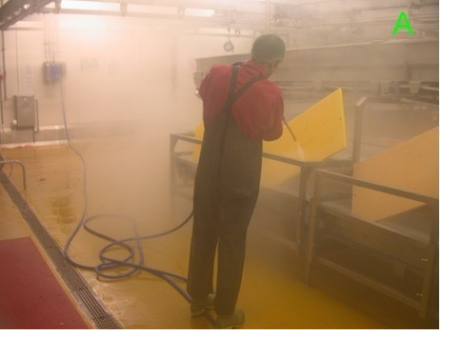
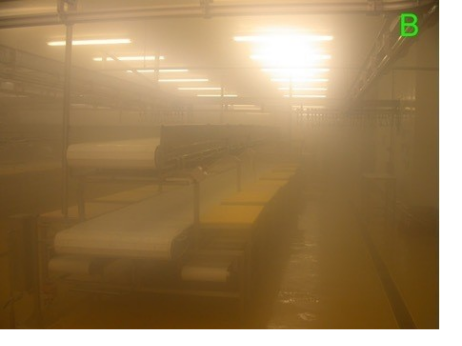
Cleaning practices can also affect condensation. Many sites carry out quick cleaning between unloading and reloading of chilled rooms. Problems arise when hot water is used, as it readily vaporises and condenses once the chiller restarts. If water cleaning is unavoidable, it should be done with the coldest water possible. Low-pressure hoses are preferable, as high-pressure hoses generate vapour and aerosols (Figures 3A and 3B). These aerosols can also spread bacteria from drains into the air, where they may settle on ceilings and later drip onto food.