
3. Food shopping and labelling
Introduction
Food Standards Scotland has policy responsibility for the general and nutrition related aspects of food labelling. This includes, the name of the food, date marking, allergens, certain aspects of country of origin labelling, along with energy and nutrient content.
This chapter provides an overview of ordering food and drink online, what respondents look for when they are shopping, following food labelling instructions and understanding and adherence to use-by and best-before dates.
3.1 Online food and drink
Respondents were asked if they had ever ordered food or drink online(21).Most respondents had ordered food or drink online through a restaurant’s, café’s or takeaway’s own website (67%) and 60% had ordered through an online ordering or delivery company such as Just Eat, Deliveroo or Uber Eats. One in 3 respondents (33%) had ordered food through an online marketplace such as Amazon, Gumtree or Etsy. One in 5 respondents (19%) had ordered food through a food sharing app such as Olio or Too Good to Go and only 8% had ordered food online through social media such as Facebook, Instagram or Nextdoor.
3.2 What do respondents look for when buying food?
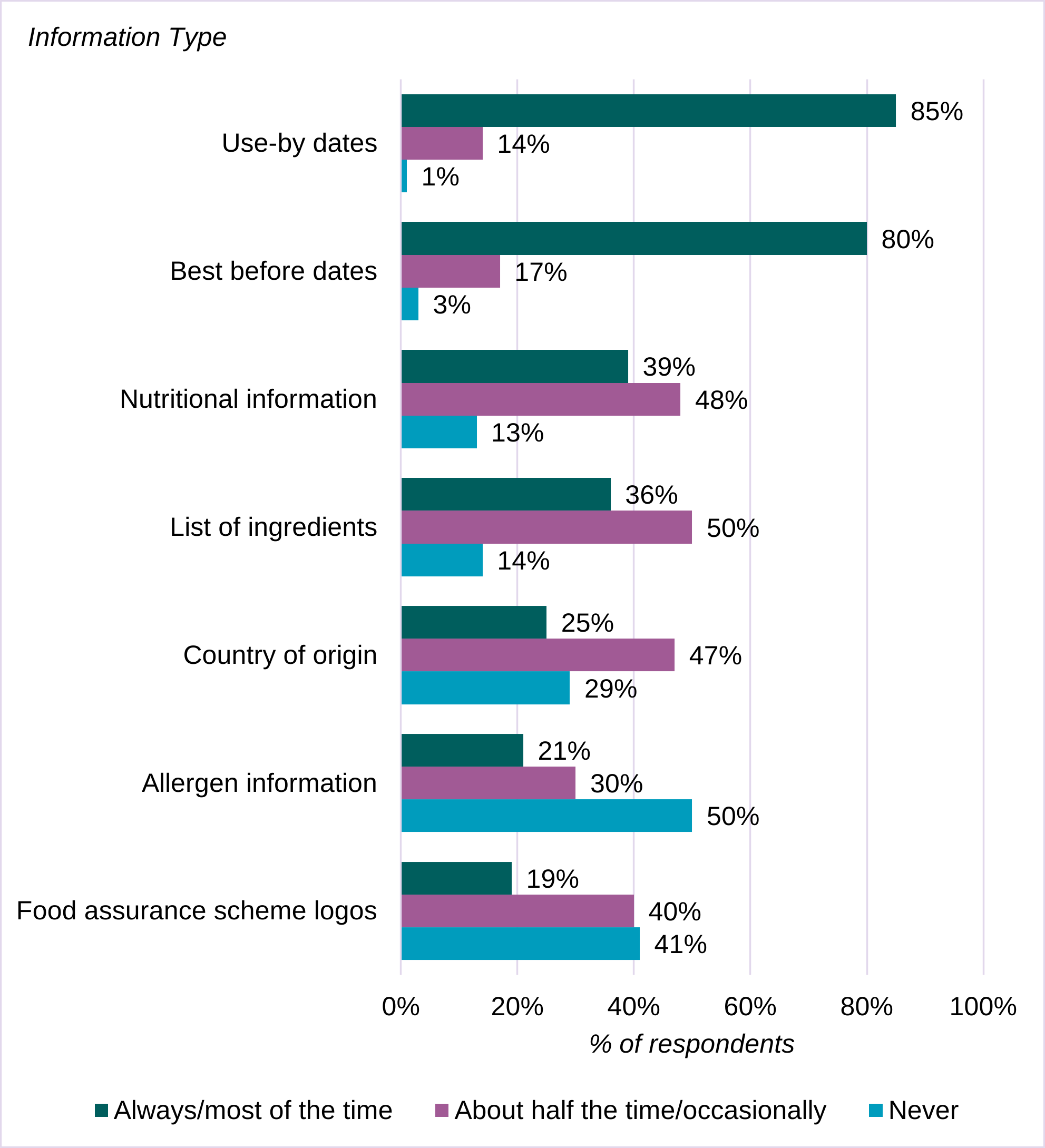
Respondents were asked to indicate what information they check when buying food(22) (Figure 4).
Figure 4: What information respondents look for when buying food
Here is a visual only chart of: Vertical bar chart showing what information respondents look for when buying food.
Source: Food and You 2 (Scotland) Wave 11
Respondents were most likely to check use-by (85%) or best before dates (80%) with the majority of respondents doing this ‘always’ or ‘most of the time’ when they bought food. Around half of respondents reported checking the list of ingredients (50%), nutritional information (48%) and country of origin (47%) about half of the time or occasionally. Four in ten respondents (40%) reported checking food assurance logos about half of the time or occasionally. Allergen information was least often checked by respondents, with 50% reporting they never checked this. However, respondents who reported having an intolerance only (48%) were more likely to check allergen information ‘always’ or ‘most of the time’ when food shopping compared to those without a food hypersensitivity (17%)(23).
3.3 ‘Eat within’ Information
Some foods have instructions on the label which advise that the food should be eaten within a few days of opening. Respondents were asked to indicate how often they follow this recommendation(24). A quarter of respondents (25%) reported that they always follow the on-pack instructions. However, most respondents (66%) reported that they do not always (i.e., most of the time, about half the time or occasionally) follow the on-pack instructions and 7% reported that they never do this.
3.4 Use-by and best-before dates
Respondents were asked about their understanding of the different types of date labels and instructions on food packaging, as storing food for too long or at the wrong temperature can cause food poisoning. Use-by dates are used to ensure the safety of products and best-before dates are used to ensure quality. FSS provides guidance on using use-by dates and best-before dates.
Respondents were asked to indicate which date shows that food is no longer safe to eat. Around two-thirds (66%) correctly identified the use-by date as the information which shows that food is no longer safe to eat. However, 8% identified the best-before date as the date which shows food is no longer safe to eat(25).
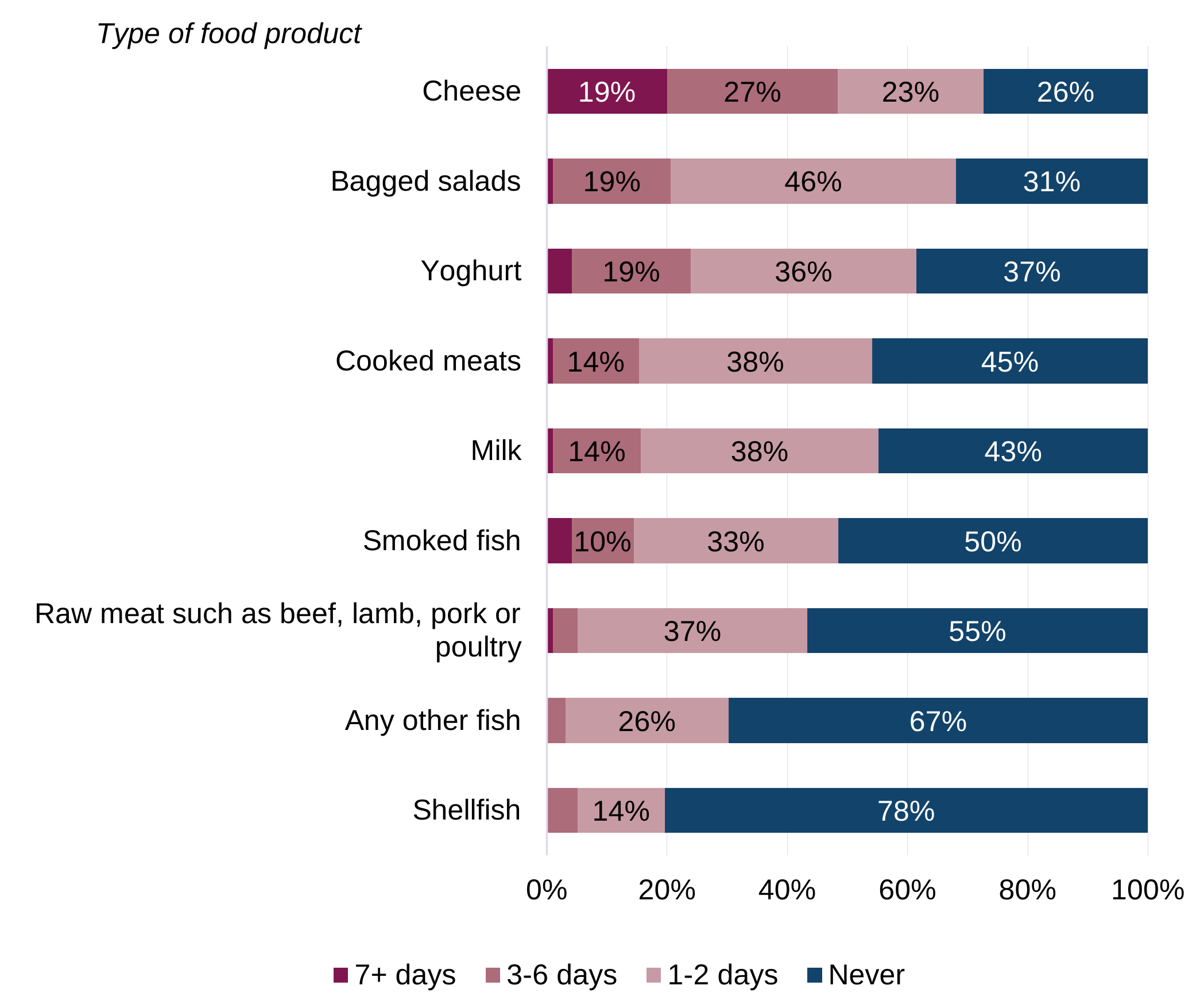
Figure 5: How long after the use-by date respondents would consume different foods*
Here is a visual only chart of: Vertical bar chart showing how long after the use-by date respondents would consume different foods.
Source: Food and You 2 Wave 11 (Scotland)
*Note: Categories with less than 10% have not been given labels due to space. However, full details can be found in the Data Tables for Scotland.
Respondents who eat certain foods were asked when, if at all, is the latest that they would eat the type of food after the use-by date (Figure 5). Most reported that they would not eat shellfish (78%) or other fish (excluding smoked fish) (67%) past the use-by date. Over half of respondents would not eat raw meat (61%) or smoked fish (50%) past the use-by date. Bagged salad (66%) and cheese (68%) were the foods respondents were most likely to report eating at any point after the use-by date. Around half would eat yoghurt (61%), milk (53%) and cooked meats (54%) at any point after the use-by date. Nearly a fifth (19%) would eat cheese one week or more after the use-by date(26) (Figure 5)(27).
References:
(21) Question: Have you ever ordered food or drink online through…a) a restaurant’s, café’s or takeaways’ own website (b) an online ordering and delivery company (e.g. Just Eat, Deliveroo or Uber Eats) (c) an online marketplace (e.g. Amazon, Gumtree, Etsy) (d) social media (e.g. Facebook, Instagram, Nextdoor) (e) a food sharing app (e.g. Olio or Too Good to Go). Responses: Yes, No. Base = 958, all online respondents.
(22) Question: When shopping for food, how often, if at all, do you check…a) use-by dates, b) best before dates, c) list of ingredients, d) allergen information, e) nutritional information, f) country of origin, g) food assurance scheme logos. Responses: always, most of the time, about half the time, occasionally, never, don’t know. Base = 920, all online respondents who ever do food shopping.
(23) Intolerance only n = 103. Numbers of respondents with other food hypersensitivities including allergy only, coeliac disease only or multiple conditions are not included due to low numbers (less than n = 30).
(24) Question: Some foods have an instruction to eat the food within a few days of opening on the label (e.g. `consume within 3 days of opening'). How often, if at all, do you follow instructions on food packaging which tell you how long food should be stored once opened? Responses: always, most of the time, about half of the time, occasionally, never, don’t know. Base = 1461, all respondents who ever do some food preparation or cooking for their household.
(25) Question: Which of these shows when food is no longer safe to eat? Responses: use-by date, best-before date, sell by date, display until date, all of these, it depends, none of these, don’t know. Base = 958, all online respondents.
(26) Question: When, if at all, is the latest you would eat or drink the following items after their use-by date? a=cooked meats, b=smoked fish, c=bagged salads, d=cheese, e=milk, f=raw meat such as beef/pork/lamb/raw poultry, g=shellfish, h=any other fish, i=yoghurt. Responses: 1-2 days after the use-by date, 3-4 days after the use-by date, 5-6 days after the use-by date, 1-2 weeks after the use-by date, more than 2 weeks after the use-by date, I don't eat/drink this after its use-by date, don't know/I don't ever check the use-by date of this. Base A=1404, B=1157, C=1400, D=1481, E=1458, F=1394, G=1011, H=1270, I=1430, all respondents who eat A/B/C/D/E/F/G/H/I. Please note: the figures shown do not add up to 100% as not all responses are shown.
(27) Note that due to rounding, percentages may not add up to 100% or match with the text.