
2. Eating at home and food safety practices
Introduction
FSS is responsible for protecting the public in Scotland from foodborne disease. This involves working with farmers, food producers and processors, and the retail and hospitality sectors to ensure that the food people buy is safe. FSS gives best practice guidance and recommendations to consumers on food safety and hygiene in the home.
Since people are responsible for the safe preparation and storage of food in their home, Food and You 2 asks respondents about their food-related behaviours in the home. Consumers are asked questions on topics such as whether specific foods are eaten, and knowledge and reported behaviour in relation to five important aspects of food safety: cleaning, cooking, chilling, avoiding cross-contamination and use-by dates. Food and You 2 also asks respondents how frequently they prepare or consume certain types of food.
This chapter provides an overview of respondent knowledge, attitudes and behaviours relating to food safety, and other food-related behaviours.
2.1 Cleaning
FSS provides guidance on handwashing to effectively remove bacteria on hands.
2.1.1 Handwashing in the home
Around 7 in 10 (72%) respondents reported that they always wash their hands before preparing or cooking food, and 28% of respondents reported that they do not always (i.e., most of the time or less often or never) do this. [3]
Most respondents (93%) reported that they always wash their hands immediately after handling raw meat, poultry, or fish, and 6% reported that they do not always (i.e., most of the time or less often or never) do this. [4]
Less than half (46%) reported that they always wash their hands before eating, 51% reported doing this sometimes[5] and 3% reported never washing their hands before eating. [6]
2.1.2 Handwashing when eating out
Respondents were asked how often, if at all, they washed their hands or used hand sanitising gel or wipes before eating when they ate outside of their home. Nearly a third (30%) reported that they always washed their hands or used hand sanitising gel or wipes when they ate outside of their home, 61% did this sometimes and 8% never did this. [7]
2.2 Chilling
FSS provides guidance on how to chill food properly to help stop harmful bacteria growing.
2.2.1 If and how respondents check fridge temperature
When asked what temperature the inside of a fridge should be, 63% of respondents reported that it should be between 0-5 degrees Celsius (°C), as recommended by FSS. Sixteen percent of respondents (17%) reported that the temperature should be above 5 degrees, 3% reported that the temperature should be below 0 degrees, and 15% did not know what temperature the inside of their fridge should be. [8]
Over half of respondents (58%) who have a fridge reported that they monitored the temperature [9] either manually (46%) or via an internal temperature alarm (11%). Of those who monitor the temperature of their fridge, 76% reported that they check the temperature of their fridge at least once a month. [10]
2.3 Cooking
FSS advises that cooking food at the right temperature and for the correct length of time will ensure that any harmful bacteria are killed. When cooking pork, poultry, and minced meat products FSS recommends using a meat thermometer to check that these meats have reached 75°C. If a thermometer is not available, the recommendation is to check that the meat is steaming hot and cooked all the way through, that none of the meat is pink and that any juices run clear.
Around 8 in 10 (81%) respondents reported that they always cook food until it is steaming hot and cooked all the way through, however 19% reported that they do not always do this. [11]
Respondents were asked to indicate how often they eat chicken or turkey when the meat is pink or has pink juices. Around nine in ten (92%) reported that they never eat chicken or turkey when it is pink or has pink juices. However, 7% reported eating chicken or turkey at least occasionally when it is pink or has pink juices. [12]
2.3.1 Reheating
Figure 1: How respondents check whether reheated food is ready to eat
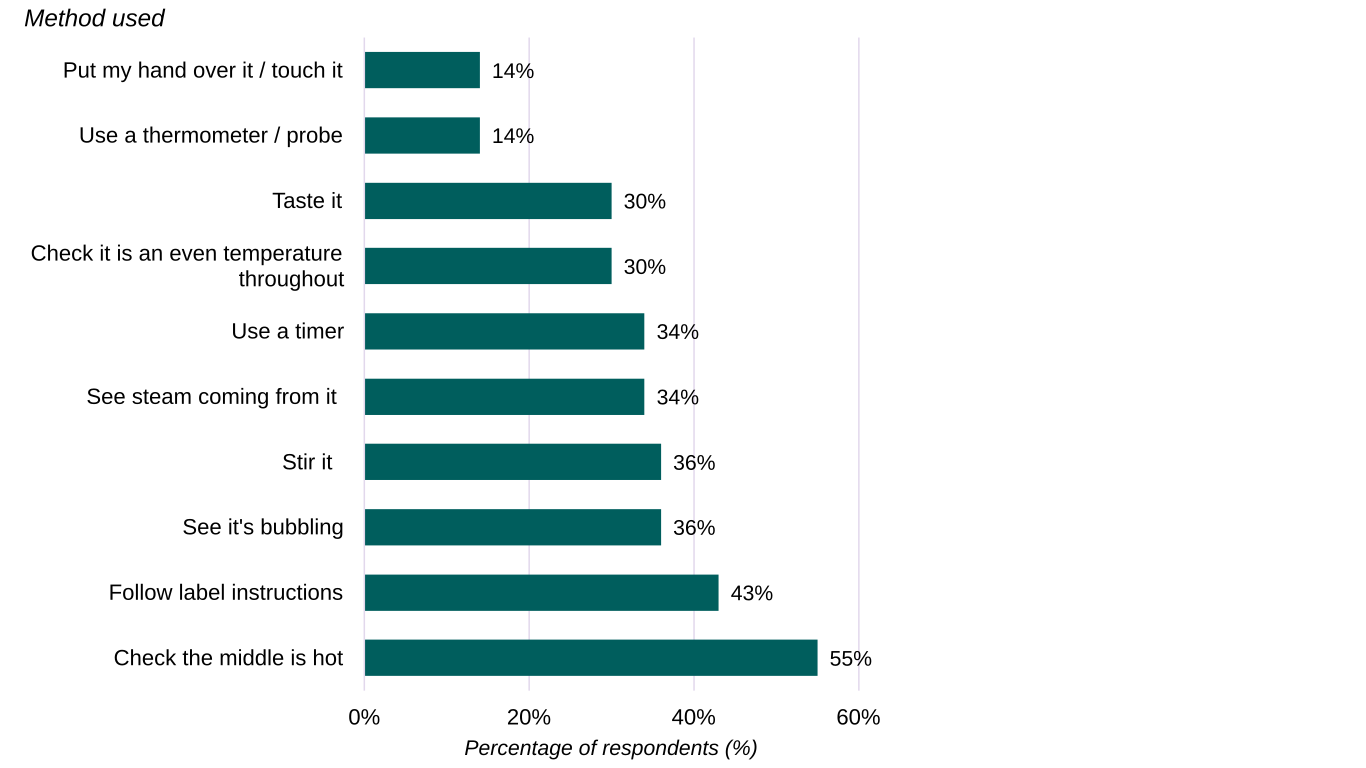
Here is a visual only chart of: Figure 1 — How respondents check whether reheated food is ready to eat A vertical bar chart shows methods respondents use to check reheated food is ready to eat. The most common method is ‘check the middle is hot’ at 55%. Mid-tier methods include following label instructions (43%), seeing bubbles (36%), stirring (36%), seeing steam (34%), using a timer (34%), checking for an even temperature (30%) and tasting (30%). The least used methods are using a thermometer/probe (14%), and putting a hand over/touching it (14%). Fewer than 1% say they don’t check at all.
Please find more information provided in the detailed description and/or table below.
Figure 1 — How respondents check whether reheated food is ready to eat
A vertical bar chart shows methods respondents use to check reheated food is ready to eat. The most common method is ‘check the middle is hot’ at 55%. Mid-tier methods include following label instructions (43%), seeing bubbles (36%), stirring (36%), seeing steam (34%), using a timer (34%), checking for an even temperature (30%) and tasting (30%). The least used methods are using a thermometer/probe (14%), and putting a hand over/touching it (14%). Fewer than 1% say they don’t check at all.
Source: Food and You 2 Wave 10 (Scotland)
Respondents were asked how they check food is ready to eat when they reheat it. The most common method was to check the middle is hot (55%), and the least common methods were to put a hand over the food or touch the food (14%) or use a thermometer or probe (14%) [13] (Figure 1). Less than 1% stated that they do not check that food is ready to eat when they reheat it.
FSS recommends that food is only reheated once. When respondents were asked how many times they would reheat food, the majority reported that they would only reheat food once (84%), 11% would reheat food twice, and 3% would reheat food more than twice. [14]
2.3.2 Leftovers
FSS recommends following the storage instructions on food products, but where these are not available and it’s a type of food that goes off quickly, FSS recommends putting the food in a fridge and eating within two days.
Respondents were asked how long they would keep leftovers in the fridge for. Around two-thirds (69%) reported that they would eat leftovers within 2 days, nearly a quarter (24%) reported that they would eat leftovers within three to five days and only 2% would eat leftovers after 5 days or longer. [15]
2.4 Avoiding cross-contamination
FSS provides guidelines on how to avoid cross-contamination which includes a recommendation that people do not wash raw meat. Washing raw meat can spread harmful bacteria onto your hands, chopping board, utensils, and worktops.
Three out of five respondents (62%) reported that they never wash raw chicken. However, a third (33%) reported that they wash raw chicken at least occasionally (this includes 19% who reported that they always wash raw chicken, and a further 14% who sometimes (most of the time, about half the time or occasionally) wash raw chicken. [16]
2.4.1 How and where respondents store raw meat and poultry in the fridge
FSS recommends that refrigerated raw meat and poultry is kept covered, separate from ready-to-eat foods and stored at the bottom of the fridge to avoid cross-contamination.
Figure 2: How respondents store raw meat and poultry in the fridge:
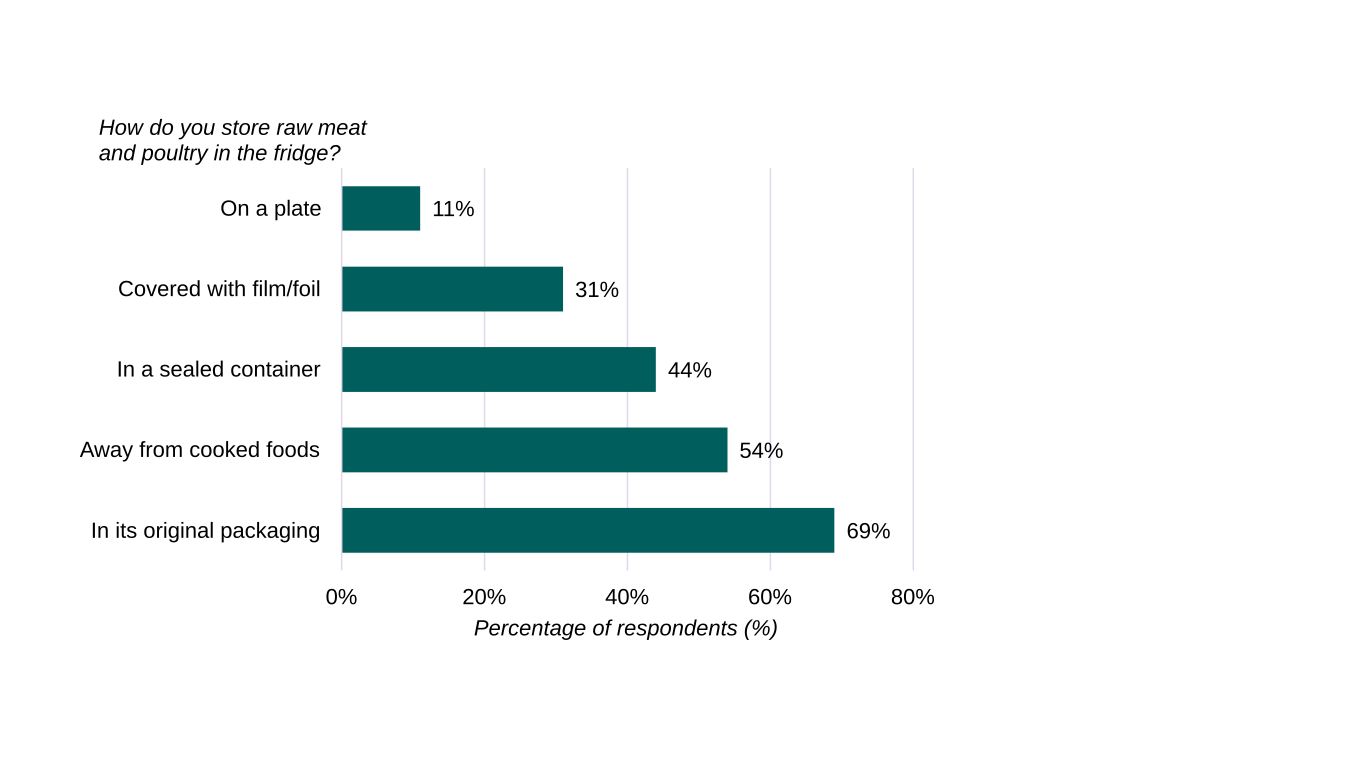
Here is a visual only chart of: Figure 2 — How respondents store raw meat and poultry in the fridge A vertical bar chart summarises where/how raw meat and poultry are stored in the fridge. The most common answer is that raw meat and poultry is stored in the fridge in its original packaging (69%), followed by away from cooked foods (54%), in a sealed container (44%), and covered with film/foil (31%). About 11% keep products on a plate.
Please find more information provided in the detailed description and/or table below.
Figure 2 — How respondents store raw meat and poultry in the fridge
A vertical bar chart summarises where/how raw meat and poultry are stored in the fridge. The most common answer is that raw meat and poultry is stored in the fridge in its original packaging (69%), followed by away from cooked foods (54%), in a sealed container (44%), and covered with film/foil (31%). About 11% keep products on a plate.
Source: Food and You 2 Wave 10 (Scotland)
Respondents were asked to indicate, from a range of responses, how they store meat and poultry in the fridge. Respondents were most likely to report storing raw meat and poultry in its original packaging (69%) or away from cooked foods (54%). Nearly half of respondents reported storing raw meat and poultry in a sealed container (44%) and 31% reported storing raw meat and poultry covered with film/foil. Around one in ten (11%) reported that they keep the product on a plate [17] (Figure 2).
Around two-thirds (69%) of respondents reported storing raw meat and poultry at the bottom of the fridge, as recommended by FSS. Around one in five (18%) reported storing raw meat and poultry wherever there is space in the fridge, 10% reported storing raw meat and poultry in the middle of the fridge, and 5% at the top of the fridge. [18]
2.5 Use-by and best-before dates
Respondents were asked about their understanding of the different types of date labels and instructions on food packaging, as storing food for too long or at the wrong temperature can cause food poisoning. Use-by dates are used to ensure the safety of products and best-before dates are used to ensure quality. FSS provides guidance on using use-by dates and best-before dates.
Respondents were asked to indicate which date shows that food is no longer safe to eat. Around two-thirds (68%) correctly identified the use-by date as the information which shows that food is no longer safe to eat. However, 10% identified the best-before date as the date which shows food is no longer safe to eat. [19]
Over two-thirds (71%) of respondents reported that they always check use-by dates before they cook or prepare food. Around a quarter of respondents (26%) reported checking use-by most of the time or less often, and just 1% reported never checking use-by dates. [20]
Figure 3: How long after the use-by-date respondents would consume different foods*
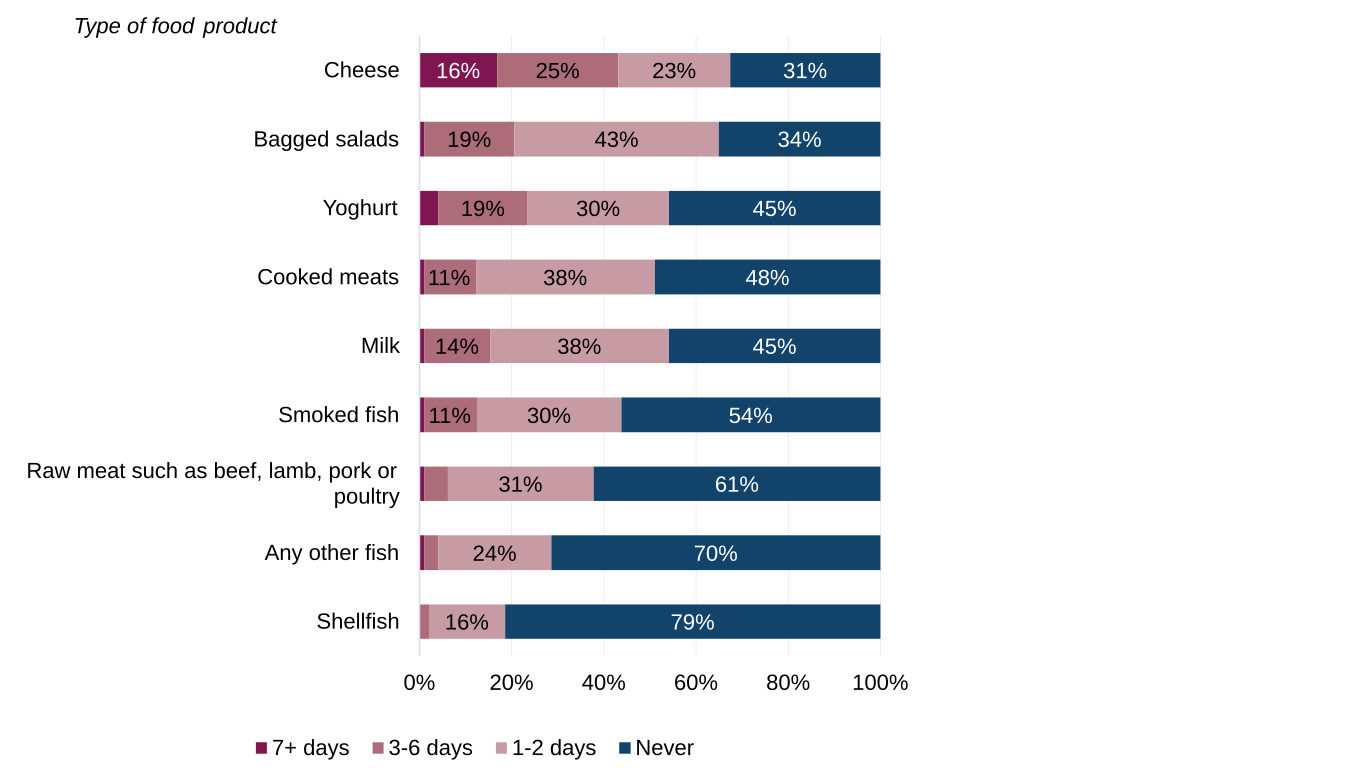
Here is a visual only chart of: A stacked bar chart compares nine food types by the latest point respondents would consume them after the use-by date. Most say they would never eat shellfish (79%) or other fish (70%) past the use-by date, and a majority would also avoid raw meat (61%) and smoked fish (54%). In contrast, many are willing to go past the date for bagged salads (63%), cheese (64%; 16% would eat at 7+ days), yoghurt (53%), milk (53%), and cooked meats (50%).
Please find more information provided in the detailed description and/or table below.
A stacked bar chart compares nine food types by the latest point respondents would consume them after the use-by date. Most say they would never eat shellfish (79%) or other fish (70%) past the use-by date, and a majority would also avoid raw meat (61%) and smoked fish (54%). In contrast, many are willing to go past the date for bagged salads (63%), cheese (64%; 16% would eat at 7+ days), yoghurt (53%), milk (53%), and cooked meats (50%).
Note: Categories with less than 10% have not been given labels due to space. However, full details can be found in the Data Tables for Scotland
Source: Food and You 2 Wave 10 (Scotland)
Respondents who eat certain foods were asked when, if at all, is the latest that they would eat the type of food after the use-by date. Most reported that they would not eat shellfish (79%) or other fish (excluding smoked fish) (70%) past the use-by date. Over half of respondents would not eat raw meat (61%) or smoked fish (54%) past the use-by date. Bagged salad (63%) and cheese (64%) were the foods respondents were most likely to report eating at any point after the use-by date. Around half would eat yoghurt (53%), milk (53%) and cooked meats (50%) at any point after the use-by date. Nearly a fifth (16%)would eat cheese one week or more after the use-by date[21] (Figure 3).
References:
[3] Question: When you are at home, how often, if at all, do you wash your hands before starting to prepare or cook food? Responses: always, most of the time, about half of the time, occasionally, never, I don’t cook, don’t know. Base = 1022, all online respondents, and those answering the ‘Eating at Home’ postal questionnaire who ever does some food preparation or cooking for their household.
[4] Question: When you are at home, how often, if at all, do you wash your hands immediately after handling raw meat, poultry, or fish? Responses: always, most of the time, about half of the time, occasionally, never, I don’t cook meat, poultry, or fish, don’t know. Base = 990, all online respondents, and those answering the ‘Eating at Home’ postal questionnaire who ever does some food preparation or cooking for their household, excluding ‘I don’t cook meat, poultry or fish’ and ‘not stated’.
[5] ‘Sometimes’ includes responses to ‘Most of the time’ (34%) ‘About half the time’ (7%) and ‘Occasionally’ (10%).
[6] Question: When you are at home, how often, if at all, do you wash your hands before eating? Responses: always, most of the time, about half of the time, occasionally, never, I don’t cook, don’t know. Base = 1103, all online respondents, and those answering the ‘Eating at Home’ postal questionnaire.
[7] Question: When eating outside of the home, how often, if at all, do you wash your hands, or use hand sanitising gel or wipes before eating? Responses: always, most of the time, about half of the time, occasionally, never, don’t know. Base = 1114, all online respondents, and those answering the ‘Eating at Home’ postal questionnaire.
[8] Question: What do you think the temperature inside your fridge should be? Responses: less than 0 degrees C (less than 32 degrees F), between 0 and 5 degrees C (32 to 41 degrees F), more than 5 but less than 8 degrees C (42 to 46 degrees F), 8 to 10 degrees C (47 to 50 degrees F), more than 10 degrees C (over 50 degrees F), other, don’t know. Base = 1102, all online respondents and all those who completed the ‘Eating at Home’ postal questionnaire, excluding those who don't have a fridge.
[9] Question: Do you, or anyone else in your household, ever check your fridge temperature? Responses: yes, no, I don't need to - it has an alarm if it is too hot or cold, don’t know. Base = 1103, all online respondents and all those who completed the ‘Eating at Home’ postal questionnaire, excluding those who don't have a fridge.
[10] Question: How often, if at all, do you or someone else in your household check the temperature of the fridge? Responses: at least daily, 2-3 times a week, once a week, less than once a week but more than once a month, once a month, four times a year, 1-2 times a year, never/less often, don’t know. Base = 533, all online respondents and all those who completed the ‘Eating at Home’ questionnaire where someone in the household checks the fridge temperature.
[11] Question: How often, if at all, do you cook food until it is steaming hot and cooked all the way through? Responses: always, most of the time, about half of the time, occasionally, never, don’t know. Base = 1022, all online respondents and all those who completed the ‘Eating at Home’ postal questionnaire who ever do some food preparation or cooking for their household.
[12] Question: How often, if at all, do you eat chicken or turkey when the meat is pink or has pink or red juices? Responses: always, most of the time, about half of the time, occasionally, never, don’t know. Base = 1007, all online respondents, and those answering the ‘Eating at Home’ postal questionnaire, who are not vegan, pescatarian or vegetarian, and who do eat chicken/turkey.
[13] Question: When reheating food, how do you know when it is ready to eat? (Select all that apply). Responses: I check the middle is hot, I follow the instructions on the label, I can see its bubbling, I use a timer to ensure it has been cooked for a certain amount of time, I check it's an even temperature throughout, I can see steam coming from it, I taste it, I stir it, I put my hand over it/touch it, I use a thermometer/probe, None of the above, I don't check. Base = 969, all online respondents and all those who completed the ‘Eating at Home’ questionnaire who ever do some food preparation or cooking for their household, excluding `I don't reheat food' and `not stated'.
[14] Question: How many times would you consider reheating food after it was cooked for the first time? Responses: Not at all, Once, Twice, More than twice, Don’t know. Base = 969, all online respondents and those who completed the ‘Eating at Home’ postal questionnaire who reheat food using one of the methods in the previous question.
[15] Question: When is the latest you would consume any leftovers stored in the fridge? Responses: The same day, Within 1-2 days, Within 3-5 days, More than 5 days later, It varies too much, Don't know. Base = 1103, all online respondents and those answering the ‘Eating at Home’ postal questionnaire.
[16] Question: How often, if at all, do you do the following? Wash raw chicken. Responses: Always, Most of the time, About half of the time, Occasionally, Never, Don’t know. Base = 1022, all online respondents who ever do some food preparation or cooking for their household, and all those who completed the ‘Eating at Home’ postal paper questionnaire, excluding ‘I don't cook’.
[17] Question: How do you store raw meat and poultry in the fridge? Please select all that apply. Responses: Away from cooked foods, Covered with film/foil, In a sealed container, In its original packaging, On a plate. Base = 990, all online respondents, and those answering the ‘Eating at Home’ postal questionnaire except those who don't buy/store meat/poultry, don't store raw meat/poultry in the fridge, do not have a fridge or don't know.
[18] Question: Where in the fridge do you store raw meat and poultry? Responses: Wherever there is space, At the top of the fridge, In the middle of the fridge, At the bottom of the fridge. Base = 977, all online respondents and those who completed the ‘Eating at Home’ paper questionnaire, who store raw meat/poultry in the fridge except those who don't buy/store meat/poultry, don't have a fridge or don’t know.
[19] Question: Which of these shows when food is no longer safe to eat? Responses: use-by date, best-before date, sell by date, display until date, all of these, it depends, none of these, don’t know. Base = 1103, all online respondents, and those answering the ‘Eating at Home’ postal questionnaire.
[20] Question: How often, if at all, do you check use-by dates when you are about to cook or prepare food? Responses: always, most of the time, about half of the time, occasionally, never, it varies too much to say, don’t know. Base = 1022, all online respondents and all those who completed the ‘Eating at Home’ postal questionnaire who ever do some food preparation or cooking for their household.
[21] Question: When, if at all, is the latest you would eat or drink the following items after their use-by date? a=cooked meats, b=smoked fish, c=bagged salads, d=cheese, e=milk, f=raw meat such as beef/pork/lamb/raw poultry, g=shellfish, h=any other fish, i=yoghurt. Responses: 1-2 days after the use-by date, 3-4 days after the use-by date, 5-6 days after the use-by date, 1-2 weeks after the use-by date, more than 2 weeks after the use-by date, I don't eat/drink this after its use-by date, don't know/I don't ever check the use-by date of this. Base A= 992, B=798, C=998, D=1038, E=1030, F= 982, G=730, H=894, I=987, all online respondents and those who completed the ‘Eating at Home’ postal questionnaire, who eat A/B/C/D/E/F/G/H/I. Please note: the figures shown do not add up to 100% as not all responses are shown.