
Sampling results
Microbiological testing
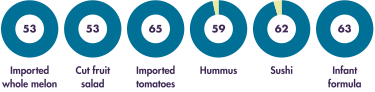
There were 355 microbiological samples analysed across six food types and only five were unsatisfactory.
- Two hummus samples was unsatisfactory due to the detection of the pathogen Listeria monocytogenes.
- Three sushi samples was unsatisfactory due to the detection of Bacillus cereus.
Chart 1. Microbiological testing results
Here is a visual only chart of: .
Please find more information provided in the detailed description and/or table below.
| Food type | Number of samples | Failures |
|---|---|---|
| Imported whole melon | 53 | 0 |
| Cut fruit salad | 53 | 0 |
| Imported tomatoes | 65 | 0 |
| Hummus | 59 | 2 |
| Sushi | 62 | 3 |
| Infant formula | 63 | 0 |
Food authenticity testing

Here is a visual only chart of: Decorative image showing icons of a cow, a pig and a sheep.
44 minced lamb or beef products were tested for the presence of undeclared meat species. Three of the products tested were unsatisfactory.
- Two lamb mince products were unsatisfactory due to the presence beef and pork.
- One lamb burger product was unsatisfactory due to the presence of beef and pork.
Chart 2. Food authenticity testing results
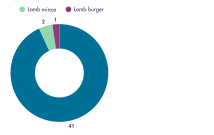
Here is a visual only chart of: Pie chart which shows the proportion of minced lamb and beef products which which were tested for the presence of undeclared meat species. Three of the products sampled were unsatisfactory.
Chemical testing
There were 250 chemical samples collected across six food types and only two were unsatisfactory.
- One cinnamon powder sample contained lead above the legal limit.
- One non-wheat cereal sample contained atropine above the legal limit, but within the margin of safety.
Chart 3. Chemical testing results
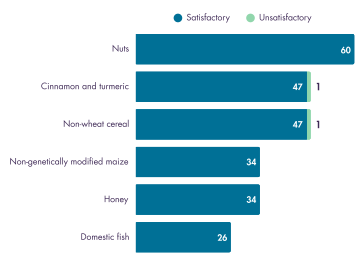
Here is a visual only chart of: Stacked bar chart showing the results of the chemical testing. 250 chemical samples were collected across 6 food types: nuts; cinnamon and turmeric; non-wheat cereal; non-GM maize; honey; domestic fish. Two samples were unsatisfactory: one cinnamon powder sample contained lead above the legal limit; one non-wheat cereal sample contained atropine above the legal limit, but within the margin of safety.
Please find more information provided in the detailed description and/or table below.
| Food type | Number of samples | Failures |
|---|---|---|
| Nuts | 60 | 0 |
| Cinnamon and turmeric | 47 | 1 |
| Non-wheat cereal | 47 | 1 |
| Non-genetically modified maize | 34 | 0 |
| Honey | 34 | 0 |
| Domestic fish | 26 | 0 |
Allergen testing
There were 48 prepacked for direct sale (PPDS) products which did not have milk or gluten in their ingredients lists that were tested for the presence of milk and gluten, and 10 samples were unsatisfactory.
Chart 4. Allergen testing results

Here is a visual only chart of: Progress bar chart which shows the proportion of prepacked for direct sale (PPDS) products which did not have milk or gluten listed in their ingredients that contained milk or gluten, 10 (20.8%) of the meals sampled were unsatisfactory.
Please find more information provided in the detailed description and/or table below.
| Total number of PPDS product samples | Failtures |
|---|---|
| 58 | 10 |
- Four products were unsatisfactory due to wording errors on the label.
- Four products were unsatisfactory because there was no allergen information as they did not have a label.
- Two products were unsatisfactory due to inappropriate use of generic precautionary allergen labelling (PAL).
There were 52 milk latte samples tested for the presence of soy and almond and all samples were satisfactory.

Here is a visual only chart of: Decorative image showing icons of a milk bottle, a magnifying glass and a coffee cup.
Local authorities took appropriate actions in response to these results to ensure consumers’ health was protected.