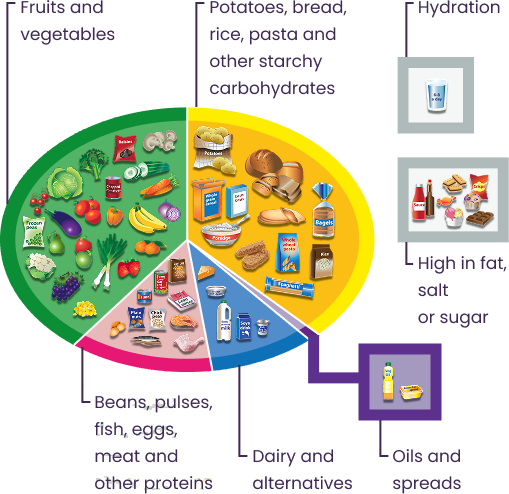
Foods in this group provide protein, which helps the body grow and repair itself. They also contain important vitamins and minerals.
Meat
Meat is a good source of protein, vitamins and minerals, as well as being one of the main sources of vitamin B12. It’s just a case of knowing which meats are high in fat, and aiming to choose leaner options instead.
Red and processed meat
Red meats include beef, lamb and pork, while processed meat includes ham, salami and other cured meats, sausages, bacon and reformed meat products.
Eating a lot of red and processed meat can increase the risk of developing bowel cancer. People who eat a lot of red and processed meat should try to reduce how much they eat. So, you should eat no more than 70 g of red and processed meat a day. That means about 2 slices of roast meat a day, or 2 sausages. If you eat a lot of red and processed meat (over 90g per person per day, which is around 3 slices of roast meat), you should try to reduce your intake.
For a healthier choice, you could swap some or all of the red and processed meat you consume with white meats like chicken or turkey, fish, eggs or beans, peas and lentils. You could even try meat-free days.
Meat and fat
Some types of meat are higher in fat, especially saturated fat. Eating lots of saturated fat can increase the level of cholesterol in your blood. Choose leaner cuts, remove the skin from chicken and trim visible fat (e.g. from rashers of bacon) and avoid adding too much extra fat/oil while cooking. Usually, the more white you can see on red meat, the more fat it contains.
Grilling meat instead of frying helps to reduce the amount of fat in the meat. Also if you’re roasting meat, a good tip is to put it on a metal rack above a roasting tin, so the fat can run out. And because meat contains its own fat, you don’t need to add much extra fat or oil, either.
- Choose leaner cuts of meat while out shopping, or ask your butcher
- Check the label on pre-packed meat, and choose those which are lower in fat
- Sausages, salami, pâté, beef burgers and other processed meat products can be high in fat and salt: check the labels and choose options that are lower in fat and salt
- Remove the skin from turkey and chicken before cooking to reduce the fat
Fish is good for you - eat two portions a week
You should aim to eat at least two portions of fish (for adults, each weighing at least 140g) every week. One of these portions should be an oil rich fish, like salmon, mackerel or herring.
Fish is a great source of protein, and contains many vitamins and minerals too. Oil-rich fish contain lots of omega 3 fatty acids, which are important for keeping your heart healthy.
The benefits of oil-rich fish
- Oil-rich fish contains lots of omega-3 fatty acids, which are important for keeping your heart healthy.
- These types of fish are also good sources of vitamins A and D.
Salmon, mackerel, trout, herring, sardines, pilchards are all examples of oil-rich fish - you can choose from fresh, frozen or tinned.
The benefits of white or non-oil-rich fish and shellfish
- White fish is very low in fat. So it can be a healthier, low-fat alternative to red or processed meat.
- All fish, including white fish, contain important vitamins and minerals. Haddock, plaice, coley, cod, tuna, skate and hake are all examples of white fish.
The fish you eat can be fresh, frozen or canned – it all counts. But remember that fish canned in brine, as well as smoked fish can be high in salt. Fish and shellfish provide us with many essential vitamins and minerals, including niacin, selenium and iodine. Depending on the fish you choose, there may be other nutritional benefits too.
Eggs
Eggs are a good source of protein and they are easy to prepare. There’s no recommended limit on how many you can eat in a week. Try to avoid adding extra fat/oil or salt to them during cooking – why not try boiled or poached eggs, instead of fried?
Pulses: Beans, peas and lentils
What is a pulse?
Pulses are edible seeds that grow in a pod. They include the whole range of beans, peas and lentils, and you can add them to soups, casseroles and meat sauces to add extra texture and flavour. That means you can use less meat, which makes the dish lower in fat and maybe even cheaper. They are high in fibre, which helps keep our digestive system healthy.
Beans, peas and lentils are all types of pulses and are good sources of protein and fibre, vitamins and minerals and are naturally very low in fat.
These make a great addition to the dishes you cook at home, and can bulk them out and help them go further. You could even use them as a tasty alternative to meat in soups, casseroles and sauces.
Other protein foods
Tofu, soya products and other plant-based alternatives can also provide protein and can be included as part of a healthy diet.