
4. Toxicological assessment
The toxicological assessment of cell-cultivated products is a core requirement of novel food evaluation. It should be addressed in all applications, unless an alternative approach can be scientifically justified. Toxicological assessments should be based on knowledge of all relevant individual components in the context of the final novel food. You should justify that the test material is representative of the product as intended to be consumed. Applicants should demonstrate that consumption under the proposed conditions of use is not expected to pose a risk to human health. This should consider:
- the properties of the cell biomass
- any novel or modified constituents
- residues of growth media components
- process‑related impurities, metabolites
- substances introduced during manufacturing
Toxicological evidence should be proportionate to the nature and complexity of the cell-cultivated product, to support an overall conclusion on safety.
4.1 Absorption, distribution, metabolism and excretion (ADME)
You should provide information on the ADME of the toxicologically relevant hazardous components present in the final novel food, to support the toxicological assessment. Other approaches may be used, these will require justification within the application. This guidance focuses on ADME considerations for individual components of toxicological relevance. ADME information related to nutritional assessment of the final novel food should be addressed in accordance with the FSA and FSS guidance on Cell-Cultivated Product Allergenicity and Nutrition.
Where ADME information is not considered necessary, for example, for substances with negligible bioavailability, you should provide clear scientific justification supported by published literature where available.
4.1.1 Tiered approach to ADME assessment
A tiered, risk-based approach is recommended to determine the level of ADME information required for all components used during the production of the cell-cultivated product. This ensures that the assessment is proportionate to the novelty, exposure potential and toxicological relevance of each constituent. You should clearly justify the selected tier, demonstrate how uncertainties are progressively reduced, and provide supporting scientific evidence at each stage.
Tier 1: Existing knowledge and low concern materials
Tier 1 may be sufficient where robust evidence from published literature is available to describe the expected fate of the toxicologically relevant components and their potential metabolites. You may rely on established digestion pathways, known breakdown of conventional animal cells, and evidence indicating negligible systemic exposure. This tier is appropriate for components that are well-characterised, have a recognised history of safe dietary use, for example conventional food ingredients, or are present at levels too low to contribute meaningfully to systemic uptake. No new ADME testing is required at this tier, provided the justification is well-supported.
Tier 2: In vitro and in silico assessment
You should progress to Tier 2 assessments if Tier 1 information is insufficient to fully characterise ADME profile, for example in substances that occur naturally in conventional foods. These may include in vitro gastrointestinal digestion models, cellular uptake or transport assays, metabolism studies in biorelevant fluids, and in silico modelling approaches to predict absorption, distribution, metabolic pathways, or excretion profiles. Tier 2 investigations help determine whether any component may become systemically available, produce metabolites of interest, or warrant further evaluation. Outcomes from this tier should be used to address residual uncertainties and determine whether higher tier testing is required.
Tier 3: Targeted in vivo ADME studies
Tier 3 applies only when findings from Tier 1 and Tier 2 indicate potential systemic exposure formation of metabolites requiring evaluation, or unresolved uncertainty regarding constituent fate. These may be substances with no history of safe use, but where toxicological data exists to support safety. You may conduct targeted in vivo toxicokinetic studies designed to address specific data gaps, for example tissue distribution, biotransformation pathways and elimination rates. Studies conducted at this tier should be scientifically justified, directly address remaining uncertainties, and use test materials representative of the marketed cell-cultivated product.
Tier 4: Hazard‑driven, higher‑tier ADME investigations
Tier 4 is reserved for scenarios where specific hazards or safety concerns have been identified, such as the formation of bioactive or potentially toxic metabolites, evidence of persistence or accumulation or properties suggesting systemic exposure at levels of concern. This may include substances with no history of safe use and no supportive toxicological data. Studies at this tier are hazard‑driven and may include advanced in vivo investigations or comprehensive metabolite profiling to fully characterise exposure, metabolic fate and biological relevance.
You should:
- justify the selection of the tier used
- demonstrate the scientific basis for the chosen approach
- explain how each tier’s findings reduce uncertainty regarding systemic exposure and metabolite formation
- The ADME tier rationale should be integrated with the overall toxicology and exposure assessment to support the safety conclusion for the cell-cultivated product
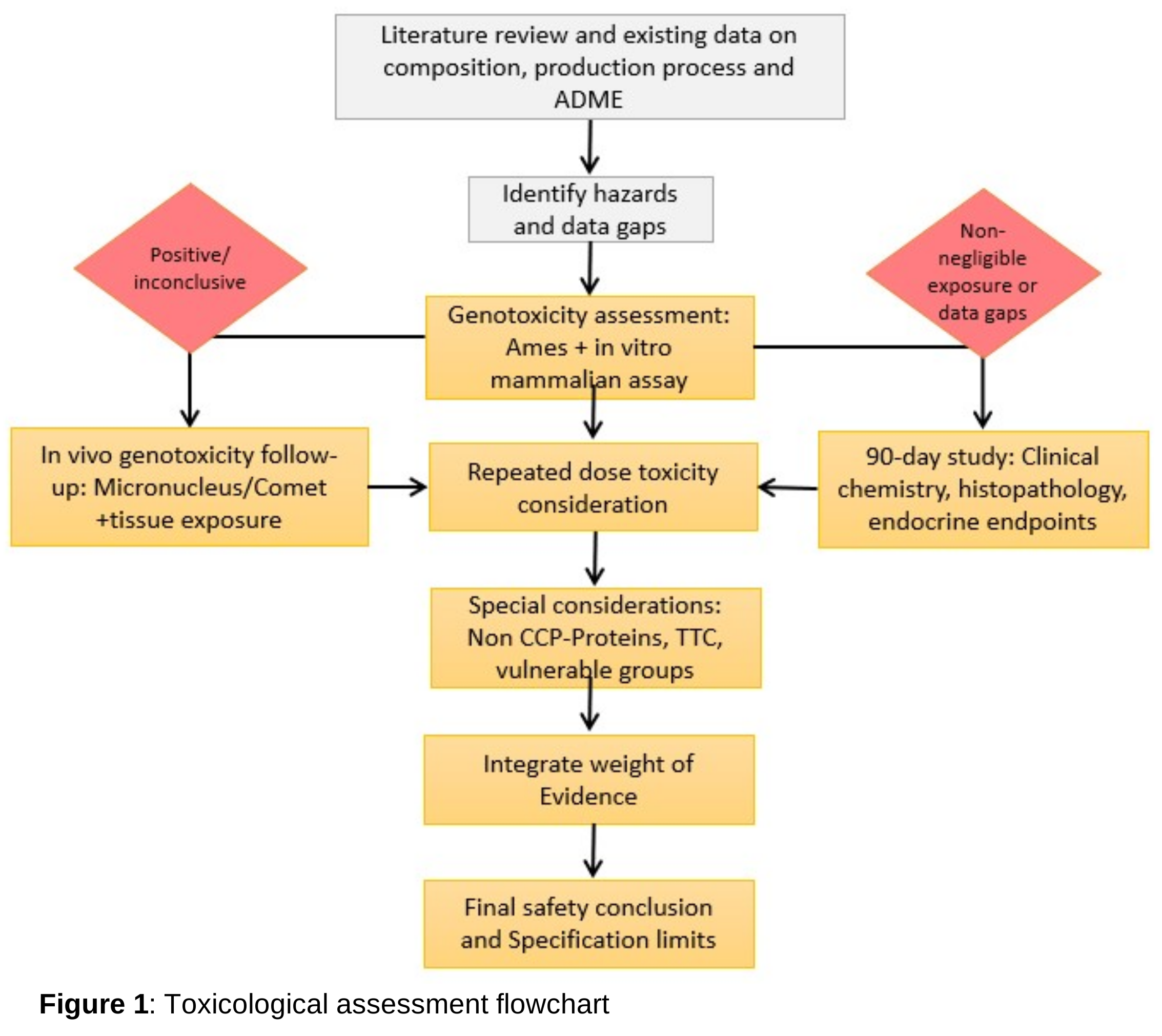
Here is a visual only chart of: Figure 1. Toxicological assessment flowchart The flowchart describes a stepwise toxicological assessment process: The process begins with a literature review and existing data covering composition, production process, and ADME (absorption, distribution, metabolism and excretion). This is followed by identification of hazards and data gaps. A genotoxicity assessment is then conducted, including: Ames test in vitro mammalian cell assays Outcomes of the genotoxicity assessment determine the next steps: If results are positive or inconclusive, proceed to in vivo genotoxicity follow-up, including micronucleus or comet assays with evidence of tissue exposure. If there is non-negligible exposure or remaining data gaps, proceed to a 90-day repeated-dose toxicity study, including clinical chemistry, histopathology, and endocrine endpoints. Findings from in vivo genotoxicity studies and/or 90-day studies inform the consideration of repeated-dose toxicity. The assessment then considers special factors, including: non-CCP proteins application of the Threshold of Toxicological Concern (TTC) vulnerable population groups All available data are then integrated using a weight of evidence approach. The process concludes with a final safety conclusion and establishment of specification limits.
Please find more information provided in the detailed description and/or table below.
Figure 1. Toxicological assessment flowchart
The flowchart describes a stepwise toxicological assessment process:
The process begins with a literature review and existing data covering composition, production process, and ADME (absorption, distribution, metabolism and excretion).
This is followed by identification of hazards and data gaps.
A genotoxicity assessment is then conducted, including:
Ames test
in vitro mammalian cell assays
Outcomes of the genotoxicity assessment determine the next steps:
If results are positive or inconclusive, proceed to in vivo genotoxicity follow-up, including micronucleus or comet assays with evidence of tissue exposure.
If there is non-negligible exposure or remaining data gaps, proceed to a 90-day repeated-dose toxicity study, including clinical chemistry, histopathology, and endocrine endpoints.
Findings from in vivo genotoxicity studies and/or 90-day studies inform the consideration of repeated-dose toxicity.
The assessment then considers special factors, including:
non-CCP proteins
application of the Threshold of Toxicological Concern (TTC)
vulnerable population groups
All available data are then integrated using a weight of evidence approach.
The process concludes with a final safety conclusion and establishment of specification limits.
4.2 Toxicological information
You should assess the toxicological safety of the cell-cultivated product novel food using a structured, weight of evidence approach. The toxicological strategy may be informed by:
- source, production process, identity and composition of the cell-cultivated product
- existing toxicological evidence, including in silico, in vitro and in vivo studies, human data, and relevant information from other sectors where applicable
- a comprehensive literature review covering the cell-cultivated product constituents and relevant metabolites
- ADME information, including potential systemic exposure
- Where data gaps remain after reviewing available evidence, you should conduct appropriate toxicological studies on toxicologically relevant components representative of the cell-cultivated product novel food.
4.2.1 Genotoxicity
You should assess the genotoxic potential of the cell-cultivated product using a stepwise testing strategy consistent with internationally recognised approaches for novel foods. You may also refer to the UK guidance on a strategy for genotoxicity testing of chemicals, to inform their approach to genotoxicity testing.
The following sequence of tests is required unless scientifically justified otherwise:
- assessment of existing genotoxicity evidence, including in silico, in vitroand in vivo studies, human data, and relevant information from other sectors where applicable
- in vitro testing: you should conduct both a bacterial reverse mutation test (Ames test) and an in vitro mammalian cell assay using:
- lysed cell-cultivated product biomass representative of the novel food and components of toxicological relevance In vivo follow-up: where in vitro results are positive, equivocal or inconclusive, applicants should perform an appropriate in vivo genotoxicity study on toxicologically relevant components. You should integrate genotoxicity findings into the broader toxicological assessment and provide clear justification on how the data supports the safety of the cell-cultivated product novel food as intended to be consumed
4.2.2 Repeated dose toxicity, including 90-day studies
You should assess the need for in vivo repeated dose toxicity studies on a case-by-case basis, accounting for the composition of the cell-cultivated product, its constituent components, expected product/component intake and systemic exposure levels and the completeness of the available safety dataset. Repeated dose studies are required where components lack sufficient toxicological information and are present at in the novel food. Animal models should only be used when a component presents a toxicological concern and necessary safety data cannot be generated using alternative methodologies. Where used, testing should only be conducted on the component of concern.
Where studies are required, you should:
- conduct sub chronic (90-day) oral toxicity studies according to OECD 408, using individual toxicologically relevant components or test material representative of the cell-cultivated product novel food
- consider including a recovery period after the 90 days, as it strengthens the study design
- consider the need for higher tier studies, where applicable, for example, reproductive or developmental toxicity studies or long-term toxicity studies
4.2.3 Special considerations for proteins, for example, recombinant growth factors
Where the cell-cultivated product contains proteins or molecules with biological activity, such as recombinant growth factors, cytokines or signalling peptides you should provide a tailored assessment addressing the following:
- potential for systemic exposure, including evidence that the protein is denatured, degraded or otherwise rendered inactive under gastrointestinal conditions
- effect of processing, such as heat, pH changes or mechanical disruption, on protein structure and activity
- evidence demonstrating lack of oral bioavailability, supported by literature, in vitro digestion studies or relevant degradation data
4.2.4 Threshold of Toxicological Concern (TTC)
You may apply the TTC approach to assess substances present in cell-cultivated products at low concentrations where conventional toxicity data are limited. The TTC approach is not appropriate for substances where UK food or feed legislation mandates the provision of toxicological data. If adequate substance-specific data exist or can be produced to support a full risk assessment, those data should be used in preference to the TTC approach. You may refer to EFSA guidance on the use of the Threshold of Toxicological Concern approach in food safety assessment.
Toxicological assessment using read-across approaches may be supported when used using reviewed guidelines by the Toxicological Committee.
4.2.5 Vulnerable populations and margin of safety
The toxicological assessment is usually performed based on product intakes in the healthy adult consumer population. You should consider whether the toxicological assessment is applicable to vulnerable subpopulations, including but not limited to:
- infants, toddlers, children and adolescents
- pregnant or breastfeeding women
- immunocompromised individuals
Where relevant, you should:
- provide justification that toxicological conclusions apply to these groups, considering exposure based on body weight
- apply additional uncertainty factors in the risk assessment, or provide subgroup-specific analysis if toxicological endpoints suggest heightened sensitivity
- ensure that margins of safety remain protective across all intended consumer groups
4.2.6 Data from studies involving humans
You may provide any human data relevant to the safety assessment of the cell-cultivated product, where available.
Human studies are not generally considered safety studies in their own right. They are typically conducted as food tolerability studies once an acceptable safety case has been established. Where available, human data can form an important component of the overall weight of evidence, providing valuable information on the tolerability and consumption of a novel food under anticipated conditions of use.
Human intervention studies should be included whenever biological measures are assessed that could be relevant to the interpretation of safety evidence, even if the primary purpose of the study was not safety, for example, efficacy trials or taste trials. Observational human data, where available, may also provide supportive product tolerability information and should be summarised accordingly. Human data should be presented according to a hierarchy of evidence, reflecting study quality and relevance. You should integrate human findings with the wider toxicological dataset to support the overall safety conclusion for the cell-cultivated product novel food.
4.2.7 Weight of evidence and overall toxicological conclusions
You should integrate all available evidence to form an overall conclusion on the safety of the cell-cultivated product. This includes the following to form an overall conclusion on the safety of the cell-cultivated product:
- literature evidence
- genotoxicity
- repeated dose studies
- use of TTC assessments
- ADME profile
- exposure estimates
The weight of evidence narrative should:
- clearly articulate how potential hazards have been addressed
- identify any remaining uncertainties and explain why they do not impact safety under the proposed uses
- propose specification limits for constituents or impurities requiring control, such as residual growth factors or components with biological activity, antimicrobial residues and heavy metals
5. Concluding remarks to include in cell-cultivated product applications
The information requested across all sections should be brough together as a concise overall assessment of how it supports the safety of the cell-cultivated product under the proposed condition of use.
6. Acknowledgements
Members of the Advisory Committee on Novel Foods and Processes (ACNFP) and the Subcommittee on Cell Cultivated Products who provided expert views at the cell-cultivated product subgroup meeting CCP03/05 (09/2025 and 04/2026) and reviewed this guidance as part of ACNFP- meeting (June 2026).
Abbreviations
| Acronym | Definition |
|---|---|
| ACNFP | Advisory Committee on Novel foods and Processes |
| ADME | Absorption, Distribution, Metabolism and Excretion |
| CAS | Chemical Abstracts Service |
| DNA | Deoxyribonucleic acid |
| EFSA | European Food Safety Authority |
| EU | European Union |
| FCM | Food Contact Material |
| FSA | Food Standards Agency |
| FSS | Food Standards Scotland |
| GB | Great Britain |
| GC-MS | Gas chromatography–mass spectrometry |
| GLP | Good Laboratory Practice |
| LC-MS/MS | Liquid Chromatography with tandem mass spectrometry |
| LOD | Limit of Detection |
| LOQ | Limit of Quantification |
| OECD | Organisation for Economic Co-operation and Development |
| OECD | Organisation for Economic Co-operation and Development |
| TTC | Threshold of Toxicological Concern |
| UK | United Kingdom |