
Equality, Diversity and Inclusion Data and Pay Gap Information
Breakdown of Age Group
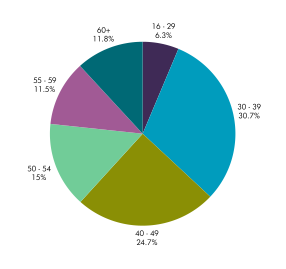
The majority of our workforce are aged between 30-39 (30.7%), with the next highest category being 40-49 (24.7%).
Here is a visual only chart of: The image is a pie chart showing the percentage of staff in different age groups. It is divided into six coloured segments, each labelled with an age range and its share of the total. Age 30–39 is the largest group, making up 30.7% of staff. Age 40–49 is the second largest group at 24.7%. Age 50–54 accounts for 15%. Age 55–59 makes up 11.5%. Age 60+ accounts for 11.8%. Age 16–29 is the smallest group, at 6.3%. The segments are arranged around the circle in different colours, starting from 12 o’clock and moving clockwise.
Please find more information provided in the detailed description and/or table below.
The image is a pie chart showing the percentage of staff in different age groups. It is divided into six coloured segments, each labelled with an age range and its share of the total.
- Age 30–39 is the largest group, making up 30.7% of staff.
- Age 40–49 is the second largest group at 24.7%.
- Age 50–54 accounts for 15%.
- Age 55–59 makes up 11.5%.
- Age 60+ accounts for 11.8%.
- Age 16–29 is the smallest group, at 6.3%.
The segments are arranged around the circle in different colours, starting from 12 o’clock and moving clockwise.
Breakdown by Gender
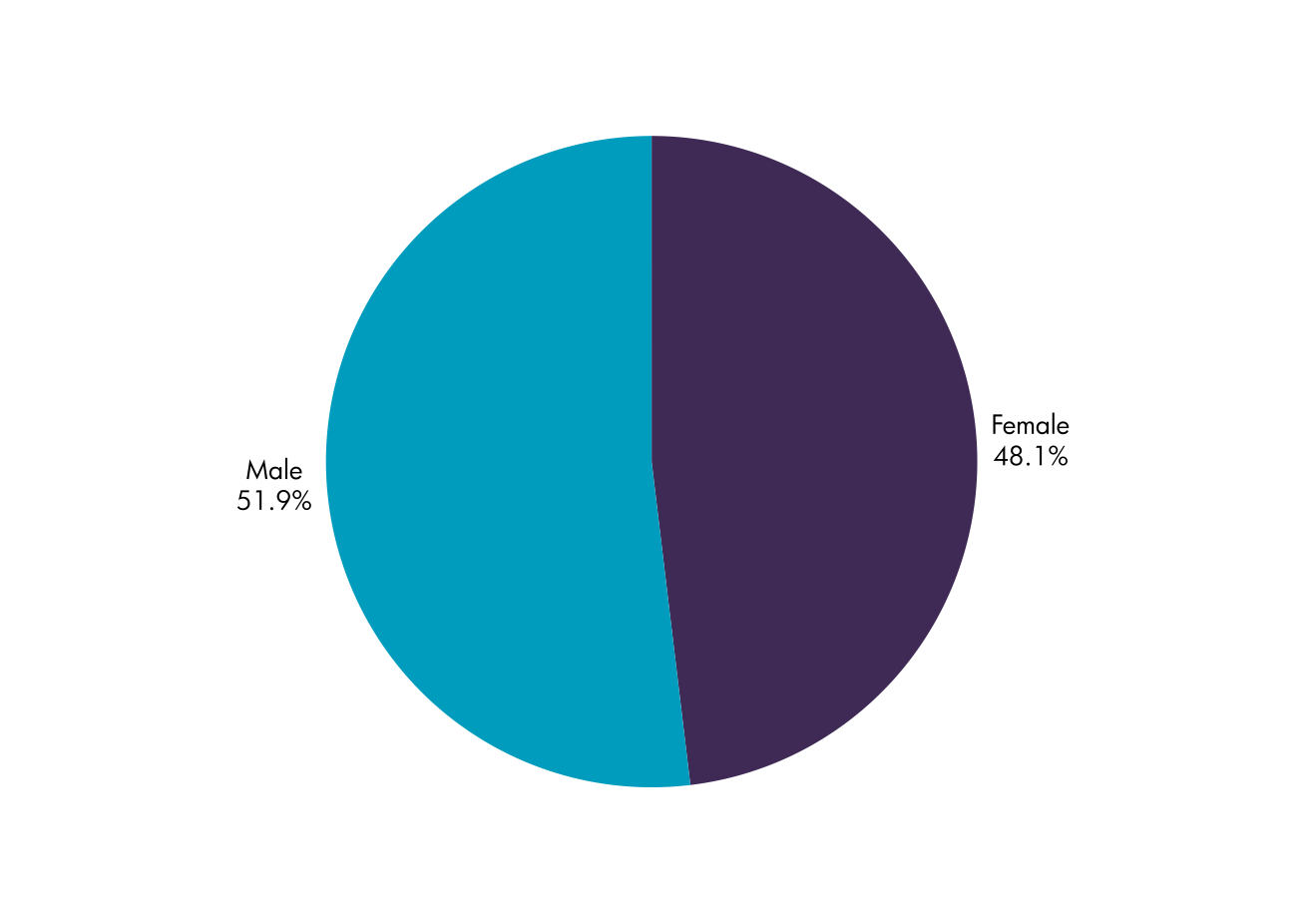
There has been little change in the gender of our workforce since the progress report in 2024, as it is still a relatively even split between male (51.9%) and female (48.1%).
Here is a visual only chart of: A pie chart showing a near‑even split, with males making up 51.9% of the group and females 48.1%.
Please find more information provided in the detailed description and/or table below.
A pie chart showing a near‑even split, with males making up 51.9% of the group and females 48.1%.
Breakdown by Disability Status
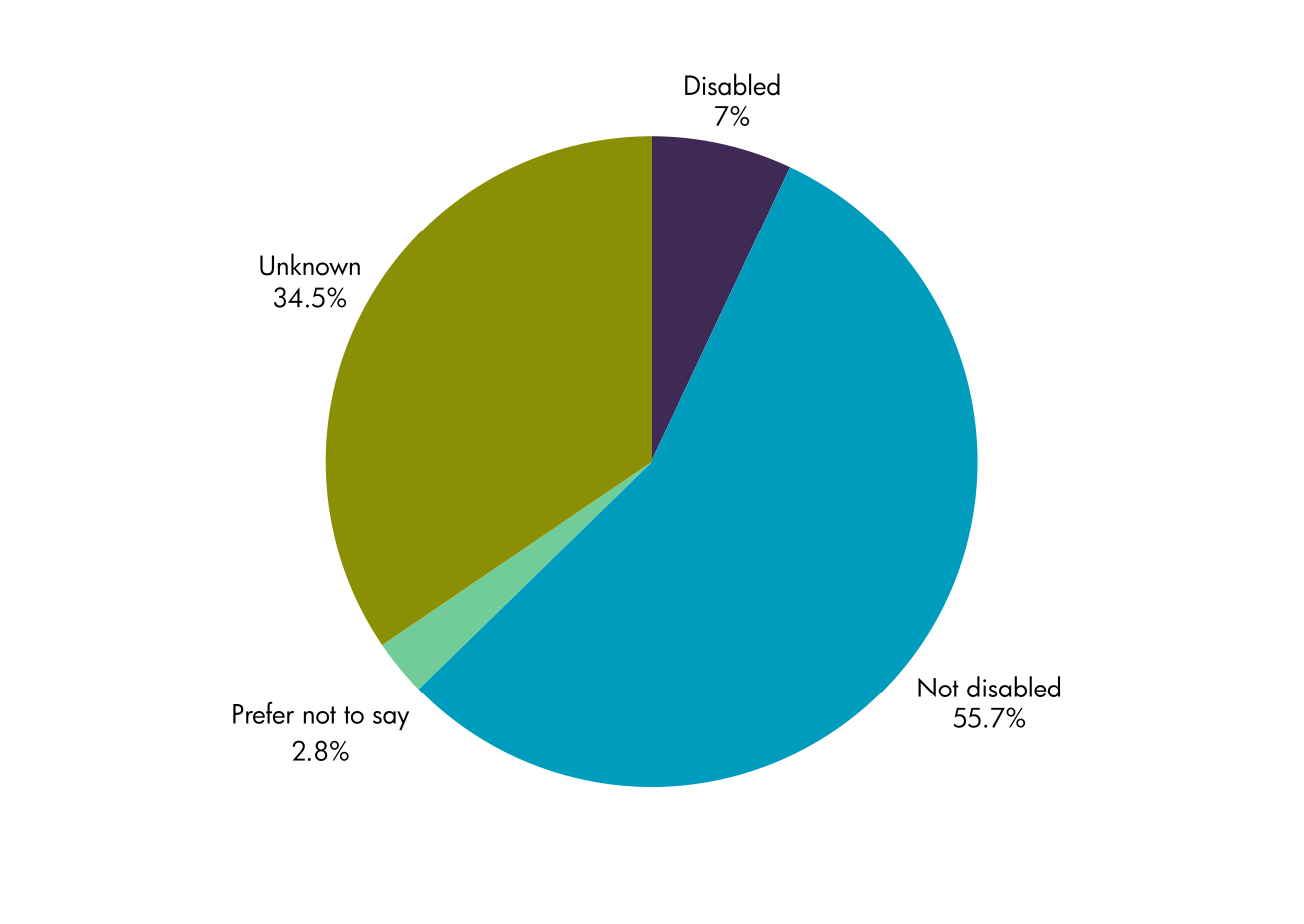
The majority of our staff have declared as “not disabled” and 7% have declared having a disability.
Here is a visual only chart of: A pie chart showing that 55.7% of people reported not being disabled, 7% reported being disabled, 2.8% preferred not to say, and 34.5% did not provide disability information.
Please find more information provided in the detailed description and/or table below.
A pie chart showing that 55.7% of people reported not being disabled, 7% reported being disabled, 2.8% preferred not to say, and 34.5% did not provide disability information.
Breakdown by Ethnic Group
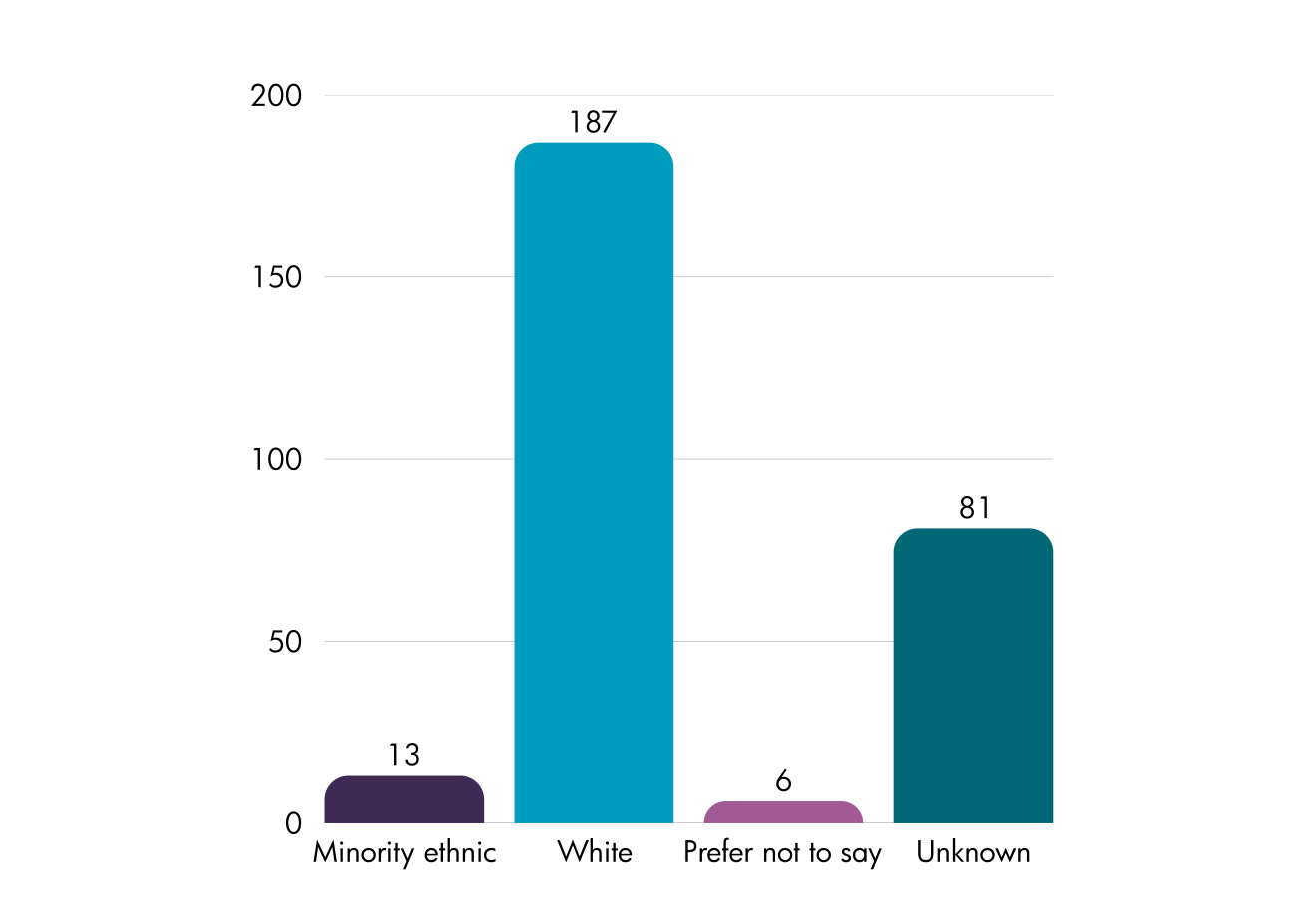
65.2% of our workforce declared themselves as “white” and 4.5% were from an ethnic minority background.
Here is a visual only chart of: A bar chart shows that most respondents identified as White (187 people), while 13 identified as from a minority ethnic group, 6 preferred not to say, and 81 did not provide ethnicity information.
Please find more information provided in the detailed description and/or table below.
A bar chart shows that most respondents identified as White (187 people), while 13 identified as from a minority ethnic group, 6 preferred not to say, and 81 did not provide ethnicity information.
Breakdown by Marital Status
The majority of staff at FSS are within the married/civil partnership category at 36.9%.
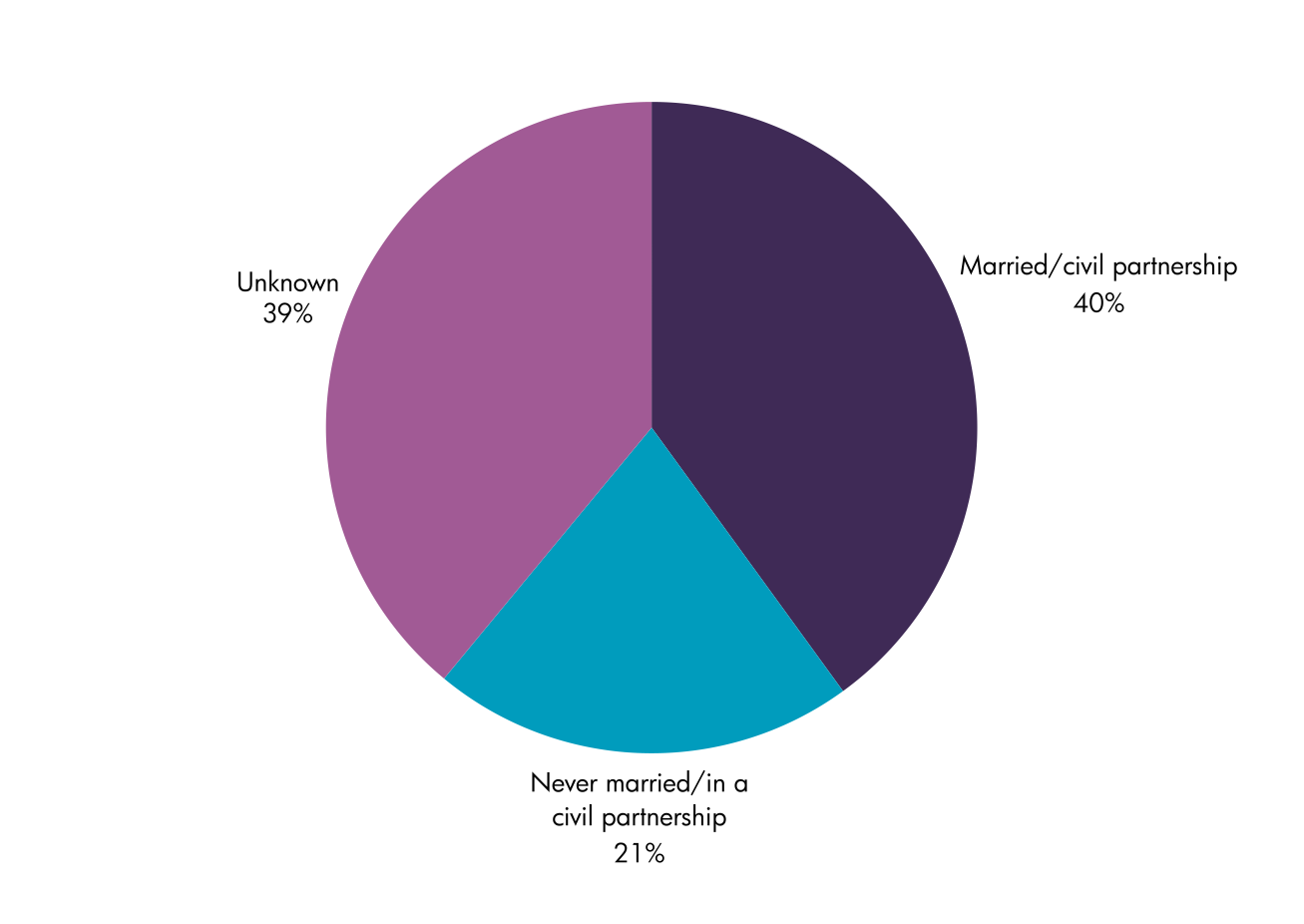
Here is a visual only chart of: A pie chart shows that 40% of people were married or in a civil partnership, 21% had never been married or in a civil partnership, and 39% did not provide their marital status.
Please find more information provided in the detailed description and/or table below.
A pie chart shows that 40% of people were married or in a civil partnership, 21% had never been married or in a civil partnership, and 39% did not provide their marital status.
Breakdown by Religion
The majority of FSS employees reported having no religion or belief at 38.7%. In addition to this, 24.7% declared themselves as Christian.
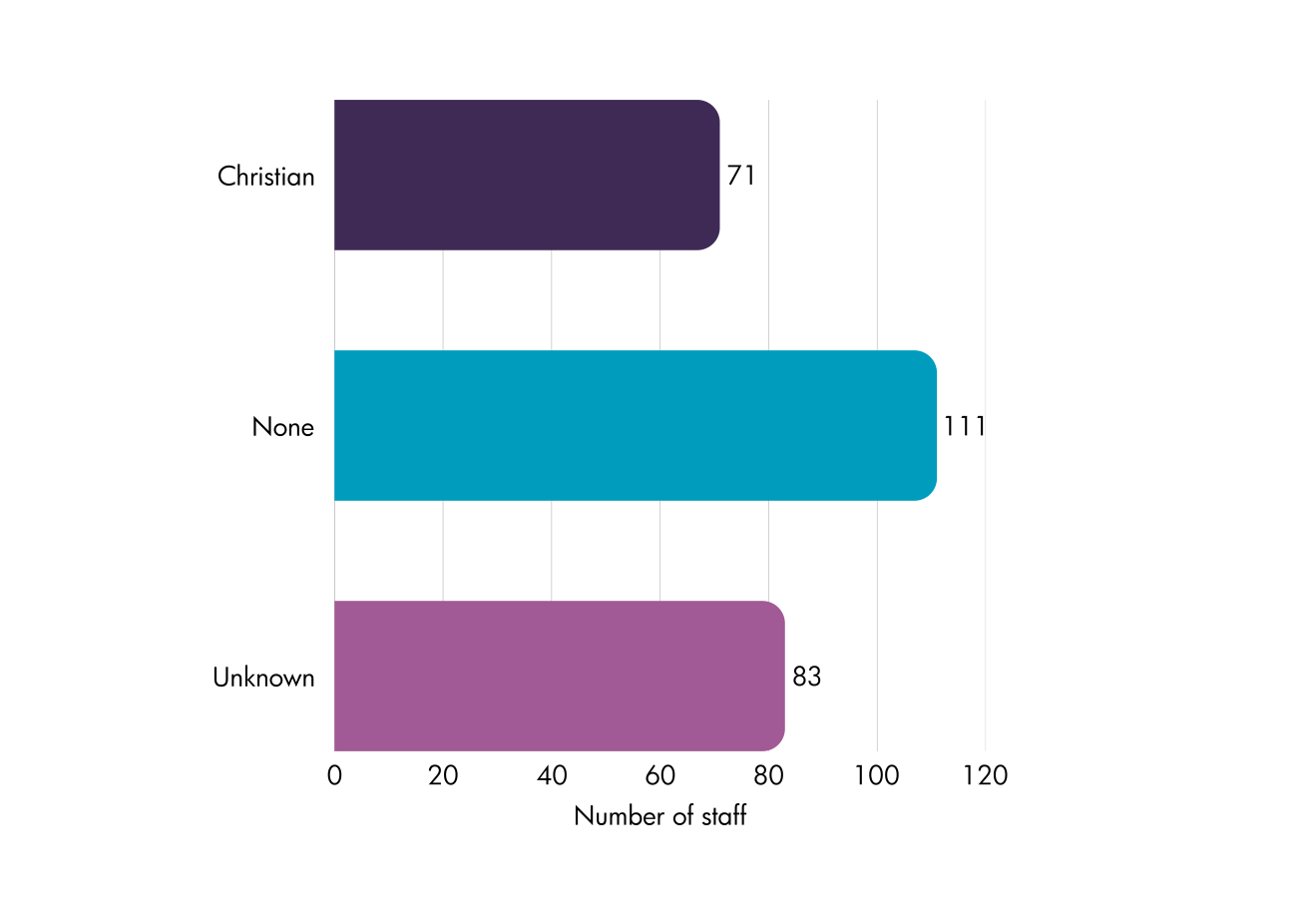
Here is a visual only chart of: A bar chart shows that 111 staff reported having no religion, 71 identified as Christian, and 83 did not provide information about their religion.
Please find more information provided in the detailed description and/or table below.
A bar chart shows that 111 staff reported having no religion, 71 identified as Christian, and 83 did not provide information about their religion.
Breakdown by Sexual Orientation
61% of staff at FSS declared as heterosexual and 5.6% identified as LGBT+.
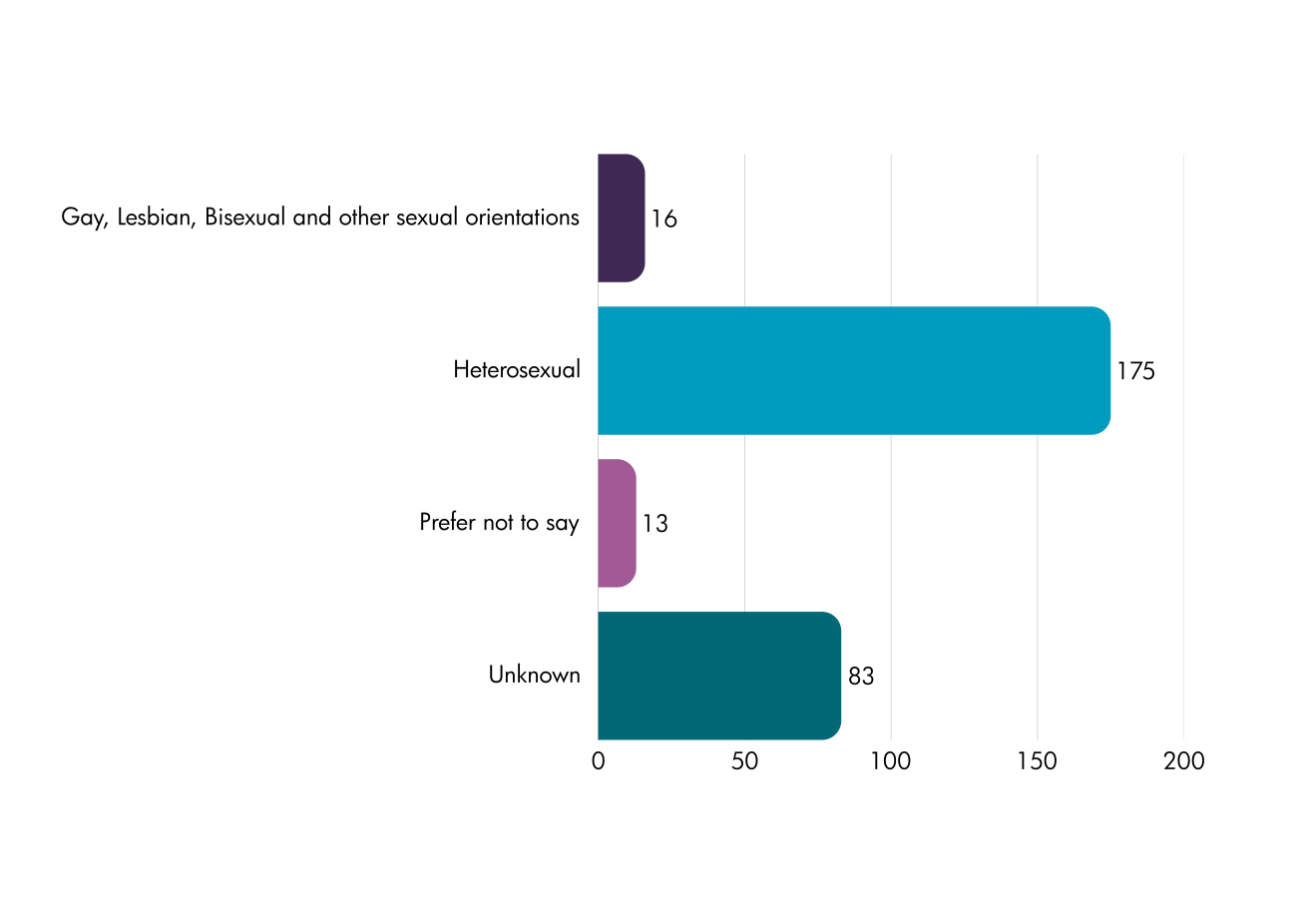
Here is a visual only chart of: A bar chart shows that 175 people identified as heterosexual, 16 identified as gay, lesbian, bisexual or another sexual orientation, 13 preferred not to say, and 83 did not provide information about their sexual orientation.
Please find more information provided in the detailed description and/or table below.
A bar chart shows that 175 people identified as heterosexual, 16 identified as gay, lesbian, bisexual or another sexual orientation, 13 preferred not to say, and 83 did not provide information about their sexual orientation.
Breakdown by socio-economic background
This category has the highest number of Unknown declarations at 66.6%, after this the next highest category is “High” at 19.2%
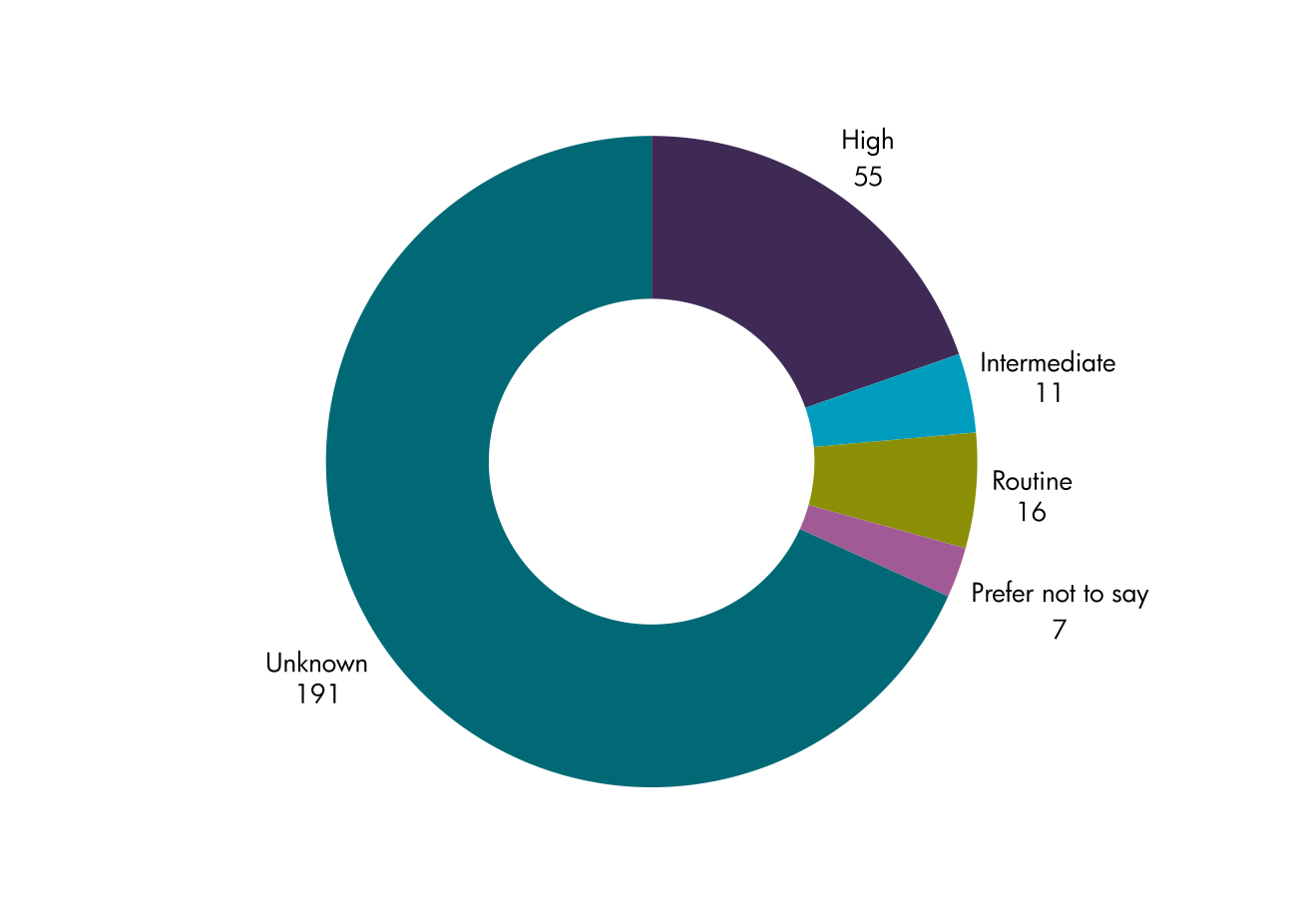
Here is a visual only chart of: A doughnut chart shows that 55 people came from a high socio‑economic background, 11 from an intermediate background, 16 from a routine background, 7 preferred not to say, and 191 did not provide socio‑economic information
Please find more information provided in the detailed description and/or table below.
A doughnut chart shows that 55 people came from a high socio‑economic background, 11 from an intermediate background, 16 from a routine background, 7 preferred not to say, and 191 did not provide socio‑economic information
Pay gap information
The Equality Act 2010 (Specific Duties) (Scotland) Regulations 2012 states that we have a duty to publish gender pay gap information. FSS defines the gender pay gap as the difference in mean full time equivalent earnings for men and women. The mean is the sum of basic salaries for each person divided by the number of people.
FSS have an equal pay policy where men and women within the same role are paid the same. However, our gender pay gap evaluates the average pay of all men and all women within the organisation.
As of December 2025, the gender pay gap at FSS is –4.2%. A negative pay gap indicates that female staff have a pay lead in FSS. Within Scottish Government, the mean pay gap between female and male staff was 2.82% at the end of 2024.
The FSS figure is likely to be influenced by a higher representation of women in higher paid roles, such as women in C band positions, whereas there is a high proportion of males in our B band roles, such as B1 Meat Hygiene Inspector, thus representing a gender pay gap.
Due to limited self-reporting on our disability and ethnic minority employees, it is difficult to report an accurate figure for our ethnicity and disability pay gap. We will continue to encourage staff to complete EDI information to allow us to accurately report on other protected characteristics and to inform our equalities outcomes.
Women in Leadership
As part of our Equalities Outcomes 2022-26, we are committed to improving women in leadership roles by looking to achieve at least 50% of females in C band roles. As of January 2026, there were 22 women in C band roles, this equates to 57.9% of all C band roles within FSS. However, there are currently no women in C3 or SCS roles.
FSS will continue to ensure women are represented in our leadership roles and at all levels of the organisation.
There has been no change to the number of women on our board since the progress report in 2024, and there remains six females (including our Chair) and two males.
People Survey
We continue to participate in the annual Civil Service People Survey which provides insights into Employee Engagement. In 2025, FSS secured a response rate of 90%. The overall employee engagement score was 70% and the HR team analysed responses and will incorporate feedback into the new People Plan.
The results from the 2025 People Survey indicate a positive shift with regards to Equality Outcome 1 as 89% of respondents felt FSS was committed to creating a diverse and inclusive workplace, an increase from 86% in the previous year.
In addition to this, 88% of managers responded that they feel the organisation provides appropriate support for them to be an inclusive manager, which has increased from 86% in 2024.
According to the 2025 People Survey, there was a decrease in the number of reported discrimination against a protected characteristic from 17 in 2024 to 14 in 2025.
2025 was the last year of the People Survey in its current format and we await further information for the roll out of the Employee Insights Programme which will replace it in 2026.
Use of BSL videos
During the reporting period, there were 506 views of BSL videos of which 50% were on the Food Standards Scotland website (253 views). Source: YouTube analytics.
Use of ReciteMe toolbar
Accessibility overlays often don’t deliver meaningful improvements and can even create new barriers for users with disabilities. Since overlays attempt automated fixes rather than addressing underlying code issues, they often result in inconsistent experiences for screen‑reader users, keyboard navigation, and other assistive technologies. Building accessibility directly into design and development leads to more inclusive, compliant, and user‑friendly digital services.
The new Food Standards Scotland website, launched in October 2025, was built with accessibility at its core and complies with WCAG 2.2, removing the need for an accessibility overlay. As a result, ReciteMe is no longer used, allowing users with disabilities or non-native English speakers to use their preferred assistive technologies when accessing the website.